SMS Verification Code Not Received? Cross-Border Pros Swear By These Troubleshooting Steps
SMS Verification Code Not Received? Cross-Border Pros Swear By These Troubleshooting Steps
If you run cross-border e-commerce or manage social media accounts at scale, you've almost certainly hit the wall where SMS verification codes never arrive. You're mid-registration for WhatsApp, TikTok, or an Amazon buyer account, and the whole flow grinds to a halt at the OTP step. Worst case? You burn a phone number or get your device flagged entirely. Most people's first instinct is to grab another number and retry—but the problem usually runs deeper than that. Let's skip the fluff and talk about what actually goes on behind the scenes.
Why Your Verification Code Never Arrives: 3 Root Causes Most People Miss
On the surface, "I didn't get the code" looks like a bad number. But once you dig in, the real culprits usually fall into one of these three buckets.
The "Dirty Number" and "Cold Number" Trap in Shared Pools
Many budget SMS platforms pull from public, free number pools. These numbers have been used for registrations thousands of times over, so they're already on every major platform's radar. With a number like that, you're not just risking a delayed SMS—carriers may block the send request outright. Industry insiders call these "dirty numbers." Then there are "cold numbers"—lines that sat unused for long stretches, got reclaimed by carriers, and then got recycled back into circulation. These carry almost zero trust weight on platforms like WhatsApp, so the odds of ever receiving a code are slim.
From my experience, a lot of cross-border teams chase the cheapest per-code rate to save a few cents, only to watch their failure rate skyrocket. Factor in the hours lost, and the "cheap" option ends up costing more. Every seasoned operator already knows this math.
Platform Risk Controls and Carrier Filters: It's Not Your Device
Sometimes the number itself is perfectly fine, and you still get nothing. That's when you need to look at two external forces. First, the target platform's risk engine. Companies like Google and Meta have become extremely good at identifying virtual number ranges. If their system flags your number as coming from a known SMS-receiving service, they'll silently drop the verification code—no error message, no warning, just silence. Second, there's carrier-level filtering. Some overseas carriers impose strict limits on high-frequency SMS channels, especially for cross-network delivery, which drives up message loss rates noticeably.
Here's a piece of industry consensus worth remembering: if you request codes repeatedly from the same device in a short window, your chances of tripping secondary risk controls go up exponentially. Many cross-border operators report that after more than five attempts from the same IP in a single day, they stop receiving codes entirely—even with brand-new numbers.
Before You Blame the Service, Check These 3 Operational Details
- Verify the number's status: Confirm the number hasn't expired or been banned by the platform. Some services automatically reclaim numbers that sit unused past a timeout window.
- Switch your network environment: Running multiple SMS verifications from multiple devices on the same WiFi network is a classic red flag. Try switching to 4G/5G or rotating your node.
- Double-check the country code: Don't laugh—this is one of the most common mistakes we see. Trying to register a US account while using a +86 number range? You're not getting that code, period.
If you've ruled all of that out and codes still aren't coming through, the platform has likely applied blanket risk controls to that entire number range. Don't fight it. Wait a few hours and retry, or switch to a different provider altogether.
The State of the Industry: How to Pick a Compliant SMS Verification Provider
Let's be honest—the SMS verification space is a minefield. Lowball pricing, sudden shutdowns, data leaks—you name it. The number of providers that can actually deliver stable, real overseas numbers while adapting to platform risk controls is surprisingly small. One platform that consistently holds up in industry circles is Getfollow, and the reason comes down to how they operate: direct connections to overseas carrier resources, regularly cleaned number pools, and strict limits on API call frequency to reduce the chance of triggering platform flags.
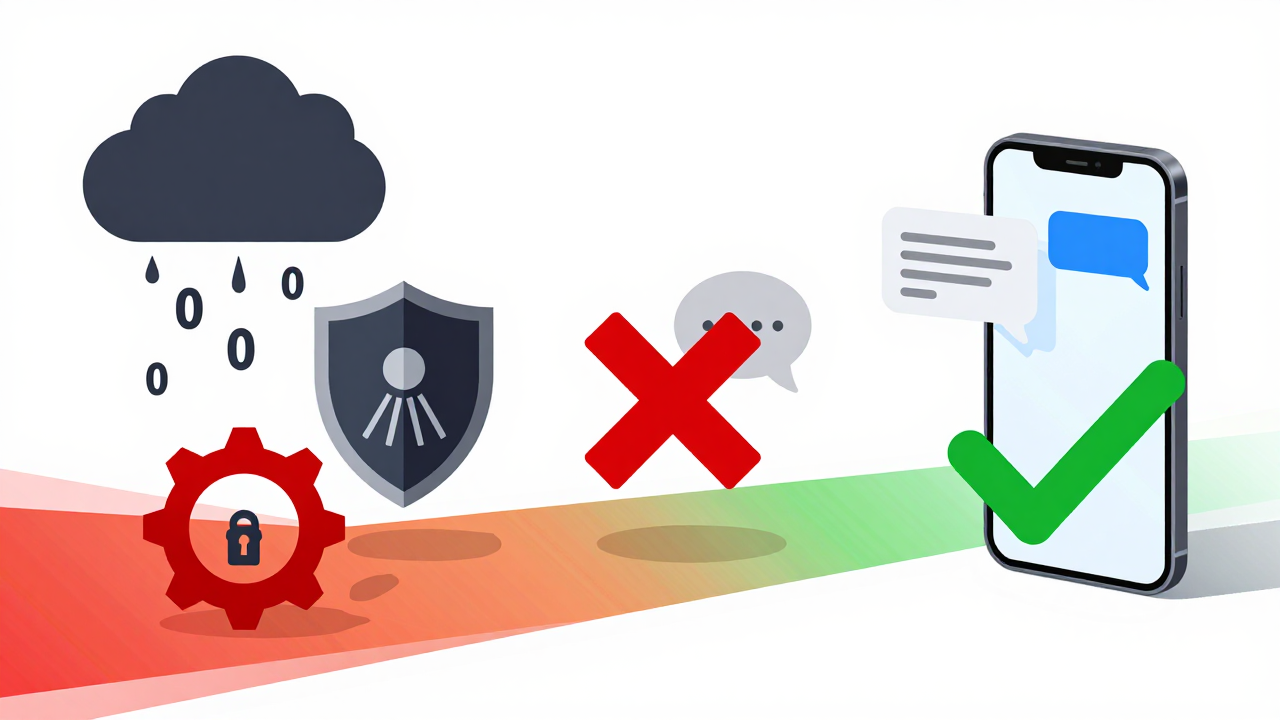
This isn't an ad—it's a benchmark. Measure any other provider against this standard and you'll eliminate half the unreliable options out there. Focus on three things: number survival rate (do they support recycling and resending?), channel stability (does it hold up during peak hours?), and support responsiveness (can you actually reach a human when things break?).
The Hidden Cost Nobody Talks About
Most teams only look at the price per code. They ignore the real cost: every registration attempt that fails because of a missed SMS burns a paid overseas number. Here's a real example. A friend running a TikTok account matrix used a budget platform for bulk registrations. That day, 40% of his numbers never received a code, and he wasted over 50 paid overseas numbers. He switched to a compliant provider afterward—sure, the per-code price went up a few cents, but his success rate jumped from 60% to over 95%. Do the math. He saved money in the end.
Let's wrap this up with some straight talk. When SMS verification codes don't arrive, roughly 80% of the time it's a number quality issue, 15% is operational error, and the remaining 5% is pure bad luck. Instead of burning hours on free platforms, spend a little money for reliability. If you're wrestling with bulk registrations, put the screening criteria above to work—test a few providers, Getfollow included, and start with a small deposit before committing to a large package. The right fit for your workflow is out there.
Frequently Asked Questions About SMS Verification Failures
Q1: Why do I still not receive codes even after switching to a brand-new number?
Your device or IP is likely already flagged by the target platform. Clear your browser cache, change your device fingerprint if you're using an emulator, and make sure your network node matches the number's country of origin.
Q2: How big is the gap between free and paid SMS verification platforms?
It's a generational difference. Free platforms rely on public number pools that are heavily abused; paid providers maintain private pools and actively adapt to platform risk rules. The success rate gap is typically 30% or more.
Q3: How can I quickly tell if an SMS verification provider is legit?
Look for three things: whether they support number recycling and resending, whether their API documentation is current and actively updated, and whether their support team actually understands the technical side—not just scripted responses. Also, ask for a test number and run a real verification yourself. Nothing beats a hands-on test.
Q4: Does repeatedly hitting "resend" help when I don't receive a code?
No—it makes things worse. Frequent resend requests trigger risk controls and can freeze the number entirely. The right move is to wait at least 60 seconds. If nothing arrives, abandon that number and move to a fresh one.