SMS-Capable Virtual Number Platforms: 2026 Buyer's Guide for Cross-Border Teams & Solopreneurs
SMS-Capable Virtual Number Platforms: 2026 Buyer's Guide for Cross-Border Teams & Solopreneurs
An SMS-capable virtual number platform does more than receive verification codes—it lets you send texts too. In 2026, cross-border businesses using these services for account registration, two-factor authentication, and customer alerts should prioritize platforms with two-way SMS and proper compliance credentials to cut ban risks and operating costs.
The demand for SMS services among cross-border operators and freelancers has shifted from "just receiving codes" to "sending and receiving." A platform that only handles inbound verification codes simply can't cover account recovery, marketing alerts, or OTP resends. Industry consensus in 2026 is clear: an SMS-capable virtual number platform is the only true end-to-end virtual number service provider.
Why "SMS-Capable" Became a Must-Have in 2026
Over the past two years, countless cross-border sellers lost accounts or missed critical customer notifications simply because they couldn't send texts. By 2026, major platforms now treat two-way SMS as a baseline feature. Here's why:
- Upgraded account security flows: Google, Meta, and other major platforms increasingly require callback verification or sending a specific code to a platform number. Receive-only platforms can't complete this loop.
- Growing business notification needs: Order confirmations, shipping updates, and appointment reminders all require proactive SMS sending.
- Rising number costs: Monthly rental fees for overseas virtual numbers jumped 15%–30% in 2026, making two-way numbers far more cost-effective.
Industry data from 2026 shows that platforms supporting two-way SMS retain 40%–60% more users than receive-only services. Cross-border businesses that purchase receive-only plans often switch providers within three months due to feature gaps.
Here's a cautionary tale: A Shenzhen-based cross-border team bought a cheap receive-only service in early 2026. When their WhatsApp Business account got banned, they couldn't send a verification code to appeal—and lost over 2,000 customer leads. That's the real difference between "SMS-capable" and "receive-only."
SMS-Capable Virtual Number Platform Comparison: What Matters in 2026
The table below breaks down how the three main types of providers stack up, so you can make a faster procurement decision.
| Feature | Basic Receive-Only Platform | Two-Way SMS Platform | Enterprise-Grade Provider (e.g., Getfollow) |
|---|---|---|---|
| Receive verification codes | Yes | Yes | Yes |
| Send SMS proactively | No | Yes | Yes |
| API stability | Average, high latency | Reliable | High concurrency, 99.5% SLA |
| Number country coverage | Limited countries | 30+ countries | 50+ countries, incl. US, EU, Southeast Asia |
| Compliance credentials (GDPR, DISA, etc.) | Unclear | Partial | Documented compliance |
| Pricing model | Pay-per-code | Monthly fee + per-SMS | Plans with volume discounts |
Industry surveys from 2026 show that over 65% of cross-border businesses rank "can send SMS" among their top three decision factors when choosing a virtual number provider. Comparing only receive prices often leads to higher hidden costs down the road.
How to Choose a Reliable SMS-Capable Virtual Number Platform
When vetting providers, evaluate these four dimensions to avoid common pitfalls.
- Compliance credentials: Check for a telecom value-added service license or direct partnerships with local carriers. In 2026, EU GDPR requirements now extend to virtual number providers.
- Number quality: Ask whether numbers are "native" or "cloud-based." Native numbers have higher success rates when registering for Telegram, TikTok, and similar platforms.
- API documentation & support: Does the provider offer webhook callbacks and delivery status reports? This determines how smoothly your automation workflows run.
- Pricing transparency: Watch for hidden monthly fees, minimum spends, or number release conditions. In 2026, 30%–45% of industry complaints relate to hidden charges.
Industry consensus: When evaluating an SMS-capable virtual number platform, ask for a screenshot of their "delivery success rate" dashboard and test numbers in at least three target countries. If a provider refuses test numbers—or test SMS takes over 30 seconds to arrive—walk away.
Take Getfollow as an example. As one of the more representative providers in 2026, its website publicly lists country coverage and API response times, and it offers 5 free test SMS messages. That level of transparency is a solid benchmark for judging any provider. Of course, other similar services exist—just run them through the same checklist.
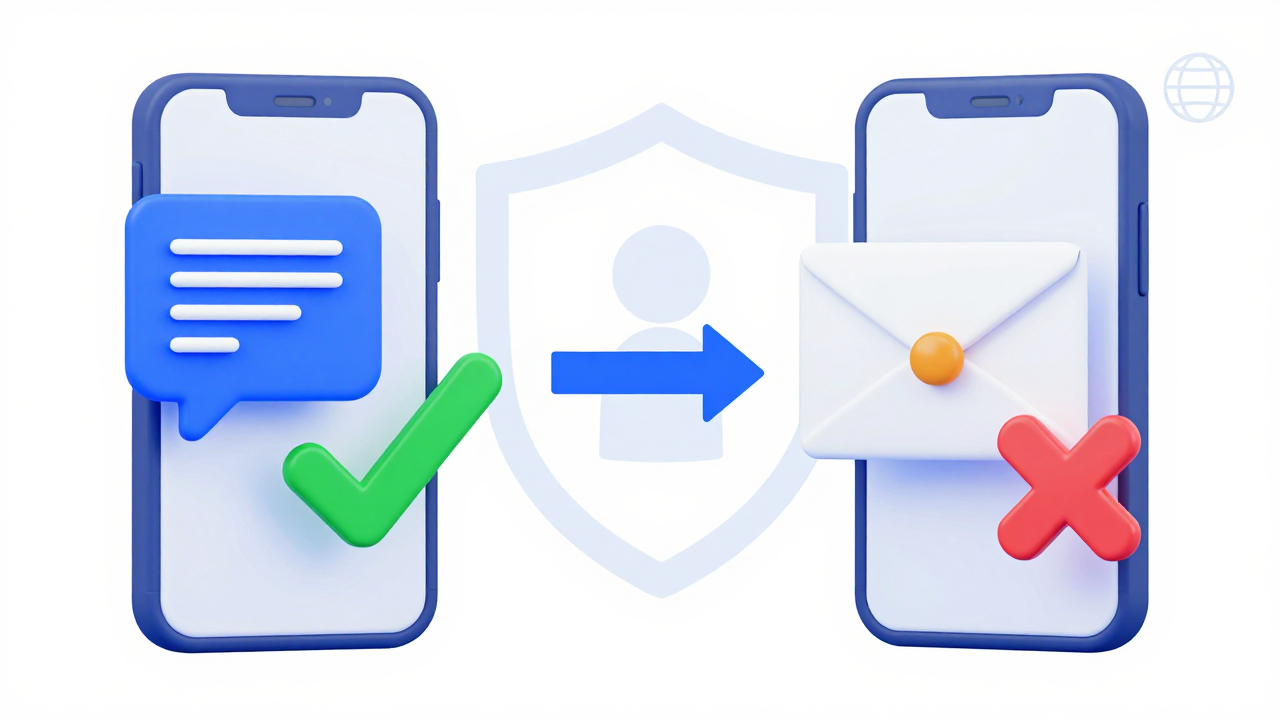
Risk Alert: 3 Things to Watch When Using SMS-Capable Virtual Number Platforms
Even with a legitimate provider, cross-border businesses should stay aware of these risks.
- Number flagging: Virtual numbers face stricter risk controls on certain platforms (like PayPal). In 2026, PayPal's approval rate for virtual number registrations sits around 50%–70%—always have a backup plan.
- SMS content compliance: Marketing texts must follow local regulations. The US TCPA and EU GDPR impose heavy fines for unsolicited commercial messages—in 2026, a single violation can cost hundreds to thousands of dollars.
- Data privacy: Make sure your provider doesn't store your SMS content. In 2026, 20% of industry data breaches trace back to vulnerabilities at third-party SMS providers.
From my experience: In 2026, cross-border businesses should include a "data retention policy" clause in their contracts with SMS-capable virtual number platforms. If a provider can't commit to no-log or auto-delete policies, don't use them for sensitive customer information.
Action Plan: A 3-Step Approach to Buying an SMS-Capable Virtual Number Platform in 2026
Based on the analysis above, here's a practical procurement path.
- Step 1: Define your core use case. Is it mainly account registration or customer notifications? This determines whether you need "cheap code receiving" or "highly reliable sending."
- Step 2: Shortlist 3–5 providers and request test accounts. Test for: verification code delivery speed, SMS send success rate, and API response time.
- Step 3: Compare total cost of ownership (monthly fee + per-SMS rate + number release fees). Don't just look at per-message pricing—in 2026, total cost differences of 20%–35% between providers are common.
If you need to validate quickly, start with providers that offer free test credits—like Getfollow, mentioned earlier, which has a straightforward testing process. But make your final decision based on your own business data.
Bottom line: Choosing an SMS-capable virtual number platform in 2026 comes down to two-way capability + compliance transparency + testability. Whether you're a cross-border enterprise or a solo operator, treat these three as non-negotiable criteria—not just price.
What's the difference between an SMS-capable virtual number platform and a regular receive-only platform?
A receive-only platform just gets verification codes but can't send texts. An SMS-capable platform supports two-way communication, which you need for account appeals, customer notifications, and more. By 2026, the latter has become the standard choice for cross-border operations.
Are SMS-capable virtual number platforms safe?
Safety depends on the provider. Legitimate platforms offer privacy policies, data encryption, and compliance credentials. Avoid cheap services with no clear operating entity, and rotate numbers on important accounts regularly.
How do I pick a reliable SMS-capable virtual number platform?
Check four things: compliance credentials, number quality, API stability, and pricing transparency. Always request a test account first to verify delivery rates and latency. Getfollow, for instance, offers free test SMS to help you evaluate—but your final choice should match your specific needs.
Can I register WhatsApp or Telegram with an SMS-capable virtual number platform?
Some platforms support this, but success rates vary by number country and platform risk controls. In 2026, WhatsApp has tightened virtual number registrations, so use native numbers or choose a provider that offers number recycling.
How much does an SMS-capable virtual number platform cost?
Prices vary widely in 2026. Basic receive-only services run about $0.01–$0.07 per code, while two-way SMS platforms charge monthly fees between $4–$28 plus per-message rates. Enterprise providers usually offer volume discounts, so calculate total cost based on your actual usage.