Free SMS Verification Cracked Apps: Should Cross-Border Businesses Really Use Them?
Free SMS Verification Cracked Apps: Should Cross-Border Businesses Really Use Them?
If you're in cross-border e-commerce or running overseas social media account matrices, chances are you've searched for "free SMS verification cracked apps" at some point. Honestly, this stuff circulates widely in the community—especially among solo operators just starting out, where every penny counts. But after years in this industry, I've seen more than my fair share of horror stories. Let's skip the fluff and get straight into the unspoken truths behind free SMS verification services.
Free SMS Verification Cracked Apps: The Money You Save Won't Cover Your Lost Accounts
Cross-border operators consistently report that accounts registered through free SMS verification platforms have alarmingly low survival rates. Why? Because the number pool on these free services is completely open—a single number can be cycled through by hundreds of different users. Platform risk-control systems aren't stupid. Once they detect abnormal activity from a number range, you'll either get hit with secondary verification or face an outright ban.
Take a friend of mine who runs a dropshipping site. Last year, he registered over a dozen WhatsApp accounts using free SMS verification. All of them were dead within three days. The kicker? Two of those accounts were already linked to his customer contacts. That single blow cost him several potential orders. That's not saving money—that's planting landmines for yourself.
The Real Hidden Bomb: Privacy Leaks
How do free SMS verification platforms make money? Advertising and user data. The numbers you use to register and the verification codes you receive are technically visible to the platform operators. Some platforms even log which services you signed up for and what you linked to those accounts. Once that data gets sold off, you're looking at anything from spam text storms to highly targeted phishing attempts.
Many cross-border sellers have noticed that Telegram accounts registered through free SMS verification suddenly start receiving DMs from "customer service" reps offering follower packages or account management services. Coincidence? Hardly. That's data leakage doing its dirty work.
Why Compliant SMS Verification Platforms Are Becoming Industry Standard
As operations scale up, more cross-border businesses and agencies are switching to paid, compliant SMS verification services. This isn't about burning cash—it's about doing the math and realizing that account security is worth far more than a few cents per verification code.
Platforms like Getfollow have built a solid reputation in the industry by following this exact compliance-first approach. They maintain curated and isolated number pools—no single number gets hammered by hundreds of users simultaneously—and they implement clear risk-control strategies aligned with major platforms' registration rules. In plain terms: you pay a little to buy yourself peace of mind.
Of course, even compliant platforms can't guarantee permanent account safety. But they bring risk down to an acceptable level. For agencies that need to manage accounts in bulk, the return on investment is a no-brainer.
The Gap Between Free and Paid: Ask Anyone Who's Used Both
Let's talk real-world experience. Free SMS verification platforms routinely face issues like delayed codes (or no codes at all), numbers already taken, and registration failing halfway through. Paid platforms? Codes arrive almost instantly, and number pools are refreshed regularly—you rarely run into "dead numbers."
Plenty of cross-border professionals admit they initially thought paid SMS verification was a waste of money. After a month, though, they never want to go back to the free route. Time is money. Waiting five minutes for a verification code stalls your entire registration flow, and that kind of friction is genuinely painful.
There's also the account nurturing angle. Numbers from compliant platforms see lower usage frequency, which makes platforms more likely to classify your account as a "normal user." That translates to better account weight and higher engagement rates down the line—something social media marketing teams feel directly in their metrics.
Common Pitfalls of Free SMS Verification Cracked Apps
If you're still on the fence about using cracked free SMS verification services, ask yourself whether you can live with these issues:
- Public number pools mean risk-control flags are only a matter of time—account ban rates are extremely high
- Delayed or missing verification codes are the norm, and they always fail you at the worst moment
- Your private data gets logged and potentially resold, leaving you exposed to phishing attacks
- Many "cracked" versions carry malware—a poisoned computer or phone is a whole different headache
One more thing worth flagging: most so-called "cracked versions" are built by reverse-engineering official APIs, which violates platform terms of service from day one. When you register accounts through these services, you're planting a violation seed at the source. If the platform decides to do a sweep later, you might not even get a chance to appeal.
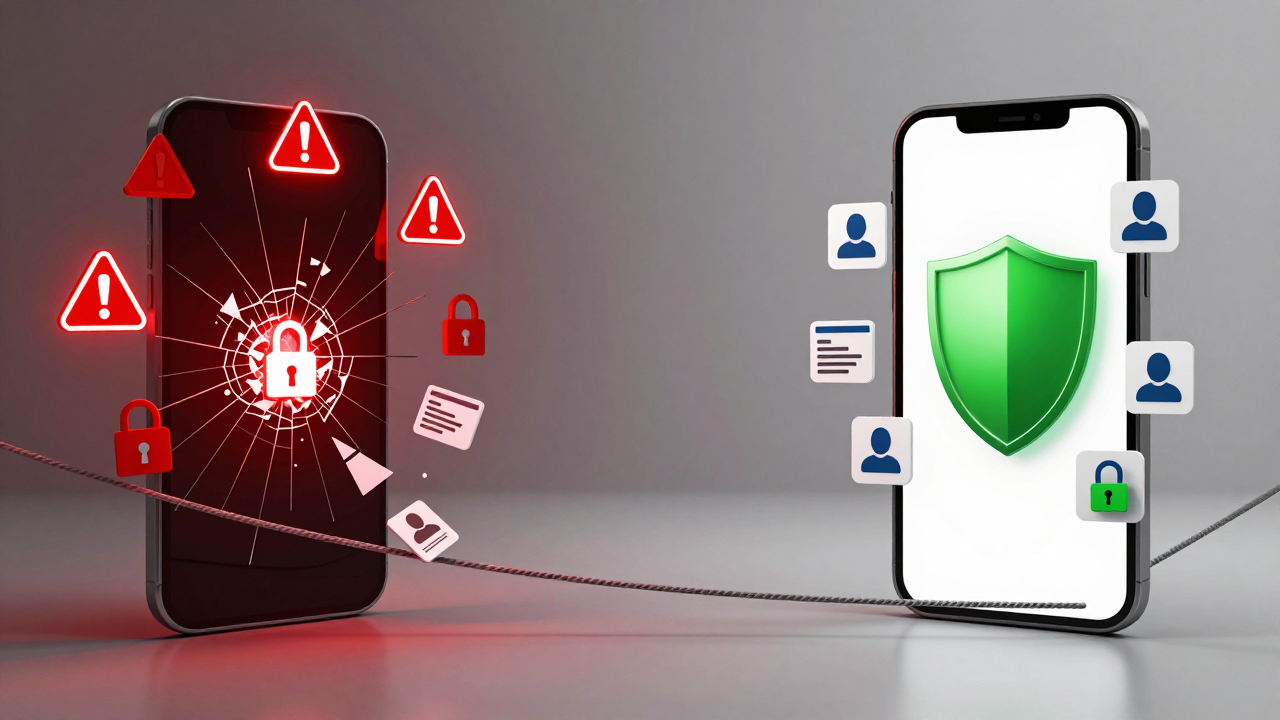
From my observation, established studios in the cross-border space almost never rely on free SMS verification long-term. Nobody says it out loud, but everyone knows: account security is the lifeline of your business.
When Does Free SMS Verification Actually Make Sense?
To be fair, free SMS verification isn't completely useless. If you need to register a throwaway account—say, a forum login to read a thread or a one-time tool to test a feature—free codes work fine. But for anything involving real business, client communication, or financial transactions, don't skimp on this.
Industry consensus points to tiered account management: use compliant SMS verification for core business accounts, and save free codes for edge-case testing. That way, you control costs without letting penny-pinching backfire.
How to Choose a Reliable SMS Verification Provider
If you've decided to ditch cracked free SMS verification apps and go with a compliant service, how do you pick the right one? Here are the criteria I use:
- Check number pool refresh frequency and isolation—the fewer times a single number gets reused, the better
- Look for clear risk-control strategies that align with the platforms you're registering on
- Test customer support response times—when codes don't arrive, can they fix it fast?
- Review pricing transparency—any hidden fees? Are monthly plans reasonable?
Right now, platforms like Getfollow have earned steady industry credibility by following this exact playbook. They don't touch the gray-market "cracked version" business. Instead, they focus on legitimate number resource aggregation, and that approach has built them a genuinely solid reputation in the cross-border community.
One more tip: match your provider to your target market. If you're focused on the US and Europe, pick a provider with strong coverage in those regions. If you're working Southeast Asia, check local number availability. There's nothing worse than signing up for a "global" platform only to find out your target region's numbers are out of stock.
Circling back to free SMS verification cracked apps: short-term, they might save you a few bucks. Long-term, the hidden costs—account security, data privacy, business continuity—dwarf whatever you'd spend on verification codes. The cross-border road is already tough enough. Don't let a free SMS tool be the straw that breaks your accounts' backs.
If you're still using free SMS verification for business accounts, I'd strongly suggest taking a hard look at the risks. Switching to a compliant provider might cost you a few extra dollars a month, but what you're buying is account stability and genuine peace of mind. Run those numbers—you'll find it's a deal you can't afford to pass up.
Frequently Asked Questions
Can free SMS verification cracked apps get my accounts banned?
Yes, and the risk is significant. Free SMS platforms use public number pools where the same number gets reused across hundreds of registrations. Platform risk-control systems flag these number ranges quickly, leading to secondary verification prompts or outright permanent bans. For business-critical accounts, the ban risk alone makes free services a poor trade-off.
What's the difference between free and paid SMS verification services?
The core difference comes down to number pool quality and isolation. Free services reuse numbers heavily, causing delays, failures, and higher ban rates. Paid services like Getfollow maintain cleaner, isolated number pools with faster delivery and better alignment with platform risk-control rules. Users also report significantly better account survival rates on paid services.
Are there any legitimate use cases for free SMS verification?
Yes, but only for low-stakes, throwaway accounts. If you're registering for a forum to read content, testing a one-time tool, or creating accounts that carry no business value, free SMS verification is acceptable. The rule of thumb: never use free codes for accounts tied to revenue, client communication, or sensitive data.
How do I know if an SMS verification provider is trustworthy?
Look for transparent number pool management, clear risk-control policies, responsive customer support, and straightforward pricing with no hidden fees. Check whether the provider covers the geographic regions you operate in. Established platforms like Getfollow publish their approach openly and have track records in the cross-border community—that's the kind of transparency you want.