Online SMS Verification for 2026: The Account Verification Challenge Cross-Border Businesses Can't Ignore
Online SMS Verification for 2026: The Account Verification Challenge Cross-Border Businesses Can't Ignore
If you work in cross-border e-commerce, you know the exact moment: you're registering a new account, you hit the phone number field, and your personal number is already tied to too many platforms. Use an online SMS verification service? Risk getting banned. Don't? Your business stalls. This dilemma is still painfully common in 2026.
I've been managing cross-border accounts since 2019, and I've watched the SMS verification industry evolve from the Wild West into a semi-regulated space. Let's skip the fluff and get straight into what the 2026 landscape really looks like—and how you should choose and use these services.
Why SMS Verification Demand Is Higher Than Ever in 2026
You'd think stricter platform risk controls would shrink the market for online SMS verification. The opposite is true—demand in 2026 has more than doubled compared to 2024. Here's why:
- Platform registration barriers are higher, with strict limits on how many accounts one phone number can verify—especially for e-commerce, social media, and ad accounts
- Multi-account matrix operations are now standard practice; single accounts are too thin-margin, so businesses need volume to spread costs
- Overseas expansion requires local numbers—think WhatsApp Business, TikTok Shop, or Amazon seller accounts—and your domestic number simply won't receive the verification code
But here's the catch: as demand surges, so does the chaos. Many new SMS verification platforms that popped up in 2026 are basically a rented server and a few API integrations—no legitimate carrier sources, yet they're charging customers without hesitation.
Here's a real example. In March 2026, a friend running a dropshipping site paid $70 to a budget platform to batch-register TikTok accounts. The next day, all 20 accounts were banned, each flagged for "suspicious device environment." He later discovered the platform used a shared virtual number pool—every customer drew from the same numbers, making them trivially easy for platform algorithms to flag.
The Real Risk Isn't Receiving the Code—It's What Happens After
Most tutorials stop at "here's how to receive a verification code." Nobody tells you that the real test begins after the code arrives. Platform risk algorithms have evolved—the SMS code is just the first gate; behavioral detection is where accounts live or die.
From my experience, a common pattern emerges: online SMS verification itself doesn't directly cause bans, but the quality of the number determines your account's initial trust score. Specifically:
- Number type: Accounts registered with VoIP numbers (like +44 or +1 virtual prefixes) start with significantly lower trust than those using physical SIM numbers
- Number reuse rate: How many people have used a number before you directly impacts the platform's trust assessment
- Region matching: Registering a US account with a Philippines number is a near-guaranteed risk trigger
Industry consensus puts 2026 SMS verification number survival rates between 50% and 70%—meaning if you buy 10 numbers, only 5 to 7 will make it past the first week. This isn't the platform's fault; it's the inherent suspicion algorithms hold toward virtual numbers.
So when choosing a provider, don't just ask "will I receive the code?" Ask "where do your numbers actually come from?" Platforms like Getfollow have built a solid reputation by getting this right—they source physical prepaid SIM cards overseas, keep reuse rates low, and offer pay-per-use pricing so you can test a small batch before committing.
Comparing SMS Verification Service Models in 2026
To help you decide, here's a breakdown of the main service models available in 2026. Each has trade-offs—there's no universal winner, only the right fit for your needs.
| Service Model | Key Characteristics | Best For | Risk Level |
|---|---|---|---|
| Free public SMS services | Numbers are publicly shared and usable by anyone | One-off code reception with no long-term account plans | Extremely high—bans are almost guaranteed |
| Budget virtual number pools | Bulk VoIP numbers at low cost | Short-term testing where account survival isn't expected | High—survival rates under 30% |
| Physical SIM pools (e.g., Getfollow) | Overseas physical SIM cards with strong number independence | Long-term operations requiring stable account trust | Moderate to low—survival rates can exceed 60% |
| Direct carrier API integration | Direct connections to overseas carrier channels, highest cost | Enterprise-level batch registration with ample budget | Low—but high entry barriers |
A common refrain I hear from cross-border operators: the real cost in 2026 isn't the money—it's the wasted time. Saving five bucks on a free SMS platform can cost you three days of waiting to re-register a banned account, delaying your entire ad campaign. That loss dwarfs any verification fee.
How to Pick a Reliable SMS Verification Provider: 3 Practical Red Flags to Avoid
There's a strange dynamic in the 2026 SMS verification market: the more legitimate the provider, the less likely they'll promise "100% success." Meanwhile, budget platforms will swear on their mother's grave that codes always arrive. The logic is simple—legitimate providers know platform risk controls shift constantly. Who can honestly guarantee anything?
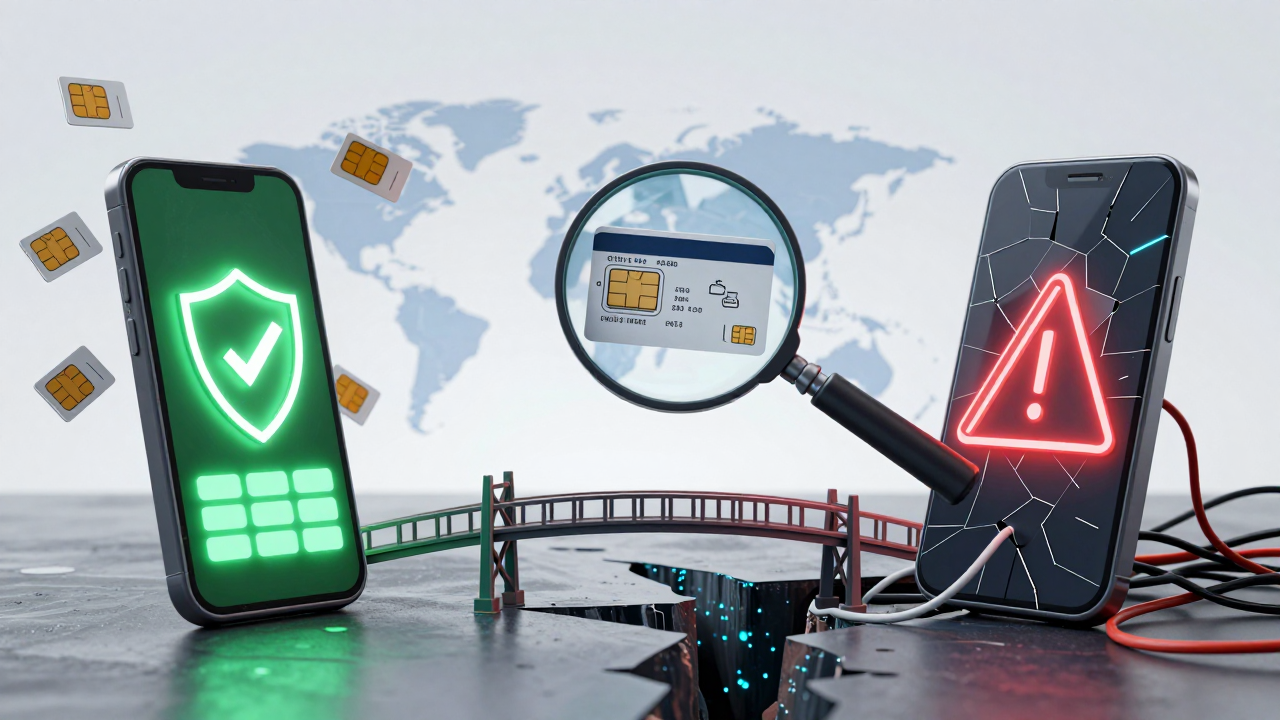
When evaluating providers, focus on these three details:
- Pay-per-use availability: Be wary of platforms demanding large upfront deposits. A good provider should let you spend a dollar or two to test a single number and verify their carrier quality.
- Selectable number regions: Mainstream platforms in 2026 let you filter numbers by country. If you need a UK number for a UK account and they can only offer US numbers, their carrier sources are limited.
- Clear refund or replacement policy: What happens if a number never receives the code? Does the platform refund or replace it? Clarify this before you pay a cent.
I've tested numerous platforms, and a pattern stands out: providers playing the long game will actually warn you—"this number range is under tight scrutiny right now, consider a different region." That kind of "anti-selling" is worth more than any aggressive pitch.
One more note: in 2026, many SMS verification platforms now require real-name verification to access API endpoints. That's a good sign—it means the industry is moving toward compliance. If a platform doesn't even require phone verification to sign up, that's a red flag. If they're not operating compliantly themselves, how clean can their numbers really be?
The Long-Term Play: Don't Treat SMS Verification as a Silver Bullet
Let me be straight with you. Online SMS verification is one link in the account operations chain. It solves the registration problem, not the account nurturing problem. In 2026, platforms evaluate accounts across their entire lifecycle, not just at sign-up.
If you only need one or two accounts occasionally, SMS verification is plenty. But if you're running a matrix operation, pair it with these strategies:
- Immediately bind your real email and a backup phone number after SMS registration to boost account credibility
- Avoid any sensitive actions for the first three days—simulate normal browsing behavior first
- Use each verified number for exactly one platform—never reuse across services
- Regularly clean up dormant accounts to reduce association risks
The 2026 cross-border landscape isn't about who registers accounts fastest—it's about whose accounts survive longest. Online SMS verification is a tool, not a shortcut. Test small before committing long-term; that principle applies to any provider, including the one you ultimately choose.
I hope this guide helps you avoid a few costly mistakes. If you've got your own experiences—good or bad—with SMS verification services, drop them in the comments. Let's help each other steer clear of the traps.
Frequently Asked Questions
Is using an online SMS verification service legal?
Legality depends on your jurisdiction and the platform's terms of service. The services themselves operate in a gray area—they're not inherently illegal, but using them to violate a platform's registration policies can result in account bans. In 2026, the industry is moving toward stricter compliance, with many providers now requiring identity verification for API access.
Why do my accounts keep getting banned even with a paid SMS verification number?
Banning is rarely caused by the verification code itself. More often, it's the number quality (VoIP vs. physical SIM), the number's reuse history, or your post-registration behavior. Platform algorithms now track device fingerprints, IP addresses, and usage patterns—not just the phone number. If you're using a budget virtual number pool, survival rates below 30% are common.
What's the difference between free and paid SMS verification services?
Free services use publicly shared numbers that have been recycled hundreds of times—platforms flag them instantly. Paid services, especially those using physical SIM cards, offer numbers with cleaner histories and better trust scores. The price difference is small compared to the cost of losing accounts and ad campaigns.
Can I use one SMS verification number for multiple platforms?
Technically yes, but it's a bad idea. Cross-platform number reuse creates association risks—if one account gets banned, linked accounts become suspicious. Industry best practice is one number per platform, and ideally one number per account for high-value operations.