How to Receive SMS Verification Codes on Your Website: 3 Integration Models Every Cross-Border Business Should Know
How to Receive SMS Verification Codes on Your Website: 3 Integration Models Every Cross-Border Business Should Know
Let's cut to the chase: receiving SMS verification codes on your website essentially means your business system calls a text message provider's gateway via API to deliver dynamic codes to users' phones. But there's far more to it than just "hooking up an API"—especially if you're operating internationally. Cross-border teams constantly battle low delivery rates, high latency, and messages getting flagged by carriers.
Over the past two years, I've worked with more than thirty overseas expansion teams, and the biggest pain points are rarely about technical implementation. The real headaches are choosing the right provider, configuring channels properly, and keeping costs under control. So let's skip the fluff and break down the three mainstream integration models, then walk through some real-world mistakes I've seen.
Model 1: Connecting Directly to Domestic SMS Providers (Best for Early-Stage Solo Operations)
This is the most traditional route. You sign up for an account with a local SMS platform, complete business verification, create your sender ID and message template, grab your API key, and follow the docs to integrate. If everything goes smoothly, you can be up and running within half a day.
But here's the catch for cross-border use: most domestic providers route international messages through third-party intermediaries, making delivery rates and speed highly unpredictable. I tested a leading platform myself—messages to Southeast Asia consistently arrived 30 seconds late, and during peak hours, delays stretched past two minutes. For time-sensitive verification codes, that kind of lag is enough to send users running.
Many cross-border operators report that while domestic platforms are cheap for international SMS (typically ¥0.35–0.50 per message), user churn climbs alongside the savings. If you're just getting started and user experience isn't your top priority yet, this model works as a temporary stopgap.
Model 2: Using International SMS Providers (Ideal for Teams with Established Overseas Users)
Providers like Twilio, MessageBird, and Vonage maintain direct connections with carriers worldwide. Their delivery rates and speed blow domestic relay channels out of the water. Integration is still API-based, but their documentation and SDKs are more polished, with support for more programming languages.
The trade-off? Your costs roughly double. Twilio, for instance, charges around $0.08–0.12 per verification SMS to US numbers—close to a yuan per message. These platforms are pay-as-you-go with no monthly fees, but they require a credit card on file, which can be a hurdle for solo developers.
Industry consensus: if your users are concentrated in high-spending regions like North America, Europe, Japan, or South Korea, international providers are worth every penny. But for Southeast Asian or Latin American markets, their coverage advantage shrinks while the price tag stays high.
Model 3: Aggregator Platforms (Best for Cross-Border Businesses Operating in Multiple Regions)
Aggregators bundle multiple SMS providers' channels into one API and use intelligent routing algorithms to automatically pick the best channel for each destination. You integrate once and get global coverage—no need to juggle multiple provider accounts.
Platforms like Getfollow have built a solid reputation in this space by aggregating multiple international channels with automatic routing by destination, plus delivery monitoring and automatic retry for failures. From my observation, aggregator pricing sits between domestic direct connections and international providers—typically ¥0.50–0.80 per message. That makes them a sweet spot for teams serving multiple countries without wanting to manage multiple provider integrations.
One word of caution: channel quality varies wildly across aggregators. Some cut corners by mixing in low-quality routes to keep prices low, causing delivery rates to fluctuate. Before committing, make sure the platform offers real-time delivery data and a proper SLA (Service Level Agreement).
Real-World Pitfall: A Cross-Border E-Commerce Team's Costly Lesson
Last year, a friend running a Middle East e-commerce site opted for a small platform's "ultra-cheap international SMS" at ¥0.20 per message to save money. The result? Only about 60% of verification codes got delivered, and a large chunk were flagged as spam by local carriers. Users couldn't complete registration, the funnel ground to a halt, and they lost over a thousand potential customers in a single week. After switching to an aggregator, costs rose to ¥0.60 per message, but delivery rates stabilized above 95% and registration conversion jumped nearly 30%.
The takeaway is simple: verification SMS is the front door to your business. The pennies you save on messaging costs are nowhere near enough to offset the damage of lost users. Spend a bit more upfront to guarantee channel quality—it pays for itself.
Three Critical Details During Integration
First, sender ID and template approval. Both domestic platforms and international providers require approval for sender IDs and message templates. Cross-border operations need extra care here—different countries have different rules. For example, messages to India must use your actual registered company name as the sender ID, or carriers will block them outright.
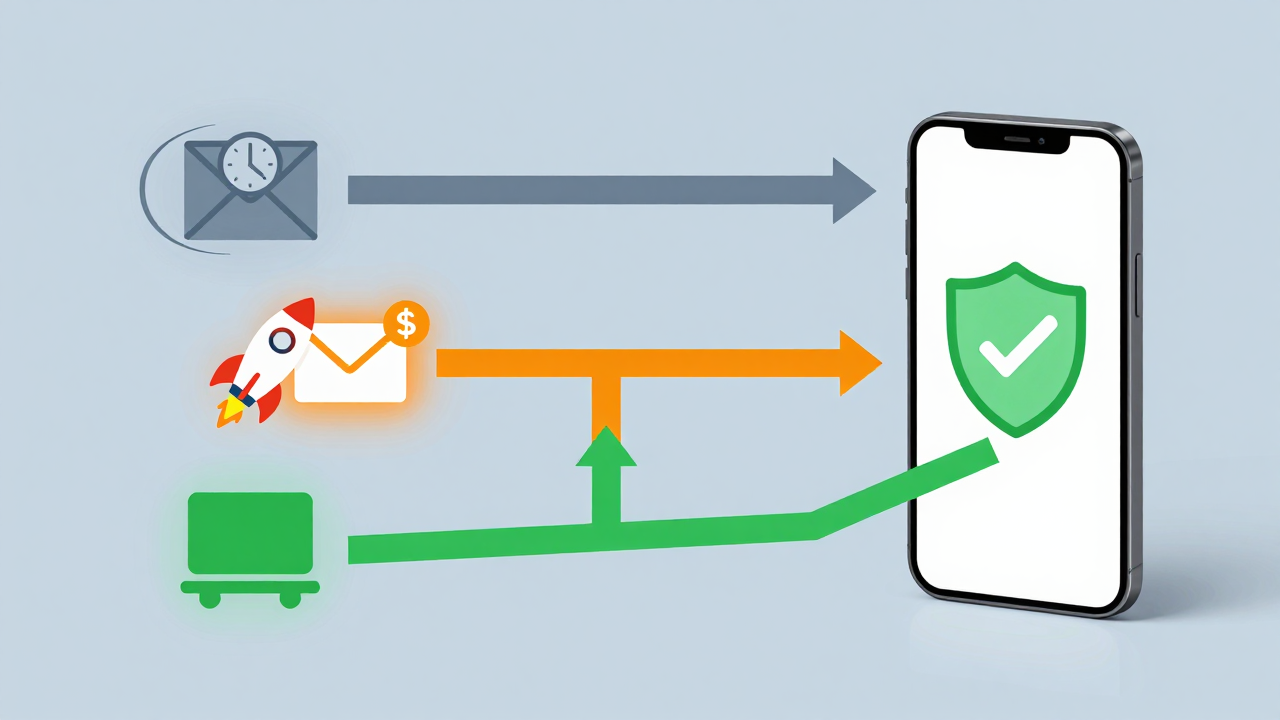
Second, verification code expiration. Many teams set codes to expire after 10 minutes—way too long for cross-border scenarios. Industry consensus points to 5 minutes or less as the sweet spot: enough time for users to enter the code, but short enough to minimize brute-force abuse. I recommend 3–5 minutes, paired with a visible countdown timer in your UI.
Third, automatic retry logic. Even the best channels occasionally drop messages. Your code needs a fallback mechanism—either automatically switching to a backup channel or at minimum offering a "Resend Code" button. Plenty of teams overlook this detail, leaving users stranded with no way to get their code.
How to Choose a Reliable SMS Provider: Three Measurable Criteria
Cross-border operators often tell me they get swayed by sales pitches. Here are three quantifiable dimensions to filter out the unreliable options.
Dimension 1: Delivery rate data. Reputable providers will share country-by-country historical delivery statistics—not just a blanket "99% delivery rate" claim. Focus on your target markets. For countries with strict spam filtering like Brazil or Indonesia, is the delivery rate above 85%?
Dimension 2: Technical support response time. Cross-border business means time zone headaches. If your messages fail at 2 AM, can your provider respond within 30 minutes? Test this before signing—submit a support ticket outside business hours and see how long the response takes.
Dimension 3: Billing transparency. Some platforms quote rock-bottom prices but tack on hidden fees like "channel maintenance charges" or "number status query fees." Before signing anything, demand a complete pricing breakdown in writing and get it included in the contract.
If your current provider falls short on any of these dimensions, shop around. Aggregators like Getfollow tend to be more transparent with pricing and country-level data, making them a useful benchmark when evaluating other options.
Balancing Cost and Retention: Test Small Before Committing Long-Term
Here's a practical tip: regardless of which model you choose, run a small-scale test before signing a long-term deal. Load up ¥200–500, send 500 test messages to your target countries, and track delivery rates, latency, and the percentage of users who actually complete verification.
Retention rate is the metric that matters most. Industry benchmarks for SMS verification flows typically land between 50% and 70%. If your test results fall below that range, something's wrong with either channel quality or user experience—time to troubleshoot.
So, how do you receive SMS verification codes on your website? The technical integration is just step one. What actually determines your success is the balance between channel quality, cost control, and user experience. Hopefully this guide helps you sidestep the common pitfalls and make a more informed decision.
Frequently Asked Questions
How much does it cost to receive SMS verification codes on a website?
Costs vary dramatically by provider and destination country. Domestic Chinese providers charge roughly ¥0.35–0.50 per international message, while international providers like Twilio run $0.08–0.12 per message. Aggregator platforms typically land in the ¥0.50–0.80 range. Always test with a small batch to measure actual costs against delivery quality.
Why are my verification SMS messages not being delivered internationally?
Common culprits include using relayed channels from domestic providers, sender ID formats that don't comply with local carrier regulations, and content that triggers spam filters. Check your sender ID against destination country requirements, monitor delivery rates per country, and consider switching to a provider with direct carrier connections or an aggregator with intelligent routing.
What is the best SMS provider for cross-border verification codes?
There's no one-size-fits-all answer. Twilio, MessageBird, and Vonage excel in developed markets with high delivery rates but come at a premium. Aggregators like Getfollow offer a balanced middle ground for multi-region operations. Evaluate providers based on country-specific delivery data, support responsiveness, and billing transparency—not just headline prices.
How long should a verification code be valid?
Industry best practice is 3–5 minutes. Anything longer increases security risks from brute-force attacks, while shorter windows frustrate users who type slowly or get distracted. Pair your expiration window with a visible countdown timer and a one-tap resend option.