How to Choose a Reliable SMS Verification Platform: What Cross-Border Sellers Don't Talk About
How to Choose a Reliable SMS Verification Platform: What Cross-Border Sellers Don't Talk About
If you run an e-commerce business or manage overseas social media accounts, you've almost certainly hit the SMS verification wall. New account registration, account warming, recovery, batch operations—any of these can grind to a halt when verification codes don't arrive. That's why SMS verification platforms have become a permanent tab in many sellers' browsers.
Here's the honest truth: this industry runs deep. From my experience observing the space for over two years, I've noticed many studio owners still pick a platform based on one factor alone—price. And that approach has quietly cost them more than they realize. Today, I'm sharing what actually matters when choosing an SMS verification platform, without the hype.
What Are You Actually Paying For?
Most people assume an SMS verification platform simply provides phone numbers to receive codes. That's technically true, but it misses the bigger picture.
The real value lies in number cleanliness and lifespan. How many people have used a number before you? Which services has it registered for? Has it been flagged by risk controls? These factors determine whether your new account survives its first week or gets banned overnight.
Industry observers agree that the fewer accounts tied to a single number, the higher its trust weight. Some platforms resell the same number repeatedly to cut costs—and your freshly registered account pays the price. This is a pattern we see far too often in cross-border circles.
So choosing a reliable SMS verification platform isn't about finding the cheapest rate. It's about finding a provider with strict number resource management.
The Hidden Costs Behind Price Wars
Current platforms generally fall into three categories: fully automated self-service, semi-manual support, and API-first solutions. Pricing ranges from a few cents to several dollars per code—and the gap means something.
Low prices usually come with three hidden risks:
- High number reuse rates—the same number gets sold to multiple buyers in a short window, making account association bans almost inevitable
- Unstable SMS delivery channels—delayed or missing codes, especially during peak hours, directly killing your registration efficiency
- Non-existent after-sales support—when something breaks, no one answers, or support shifts blame until you give up
I tested a budget platform once and purchased 10 numbers. Three never received codes. After two days of back-and-forth with customer service, I got a refund for exactly one number. If that sounds familiar, you're not alone.
What Actually Matters When Choosing a Platform
Since price alone won't protect you, here are four practical criteria I've developed through hands-on testing and industry feedback. Use these as your screening checklist.
1. Can They Trace the Number Source?
Reputable platforms will tell you whether numbers come from physical SIM cards or virtual numbers, which carrier they belong to, and their general region. If a provider dodges these questions and just says "overseas numbers," proceed with caution.
Many cross-border operators report that opaque number sourcing is a leading cause of downstream account issues. If you don't know what a number was used for before you got it, you're gambling with your business accounts.
2. Do They Have a Clear Number Recycling Policy?
A responsible platform actively retires numbers that have been flagged or misused—rather than reselling them to the next customer. This detail gets overlooked constantly, but it's the clearest line between professional operators and fly-by-night sellers.
Platforms like Getfollow have built a solid reputation in this area by following a compliant operational model: numbers are recycled after use to minimize reuse risk. That's just one example, not an endorsement, but it shows what the right direction looks like.
3. How Stable Is Their API Integration?
If you're running batch operations from a studio setup, manually copying and pasting verification codes simply doesn't scale. You need a stable API that connects directly to your automation tools.
Here's a simple test: run a few API calls during off-peak hours and monitor response speed and success rates. If you're seeing timeouts during testing, peak hours will be a disaster. Walk away.
4. Can You Test Before Committing?
Reliable platforms typically let you start with a small deposit, test a few numbers, and scale up once you've confirmed quality. If a platform demands a large upfront package with no refund option, that's a massive red flag.
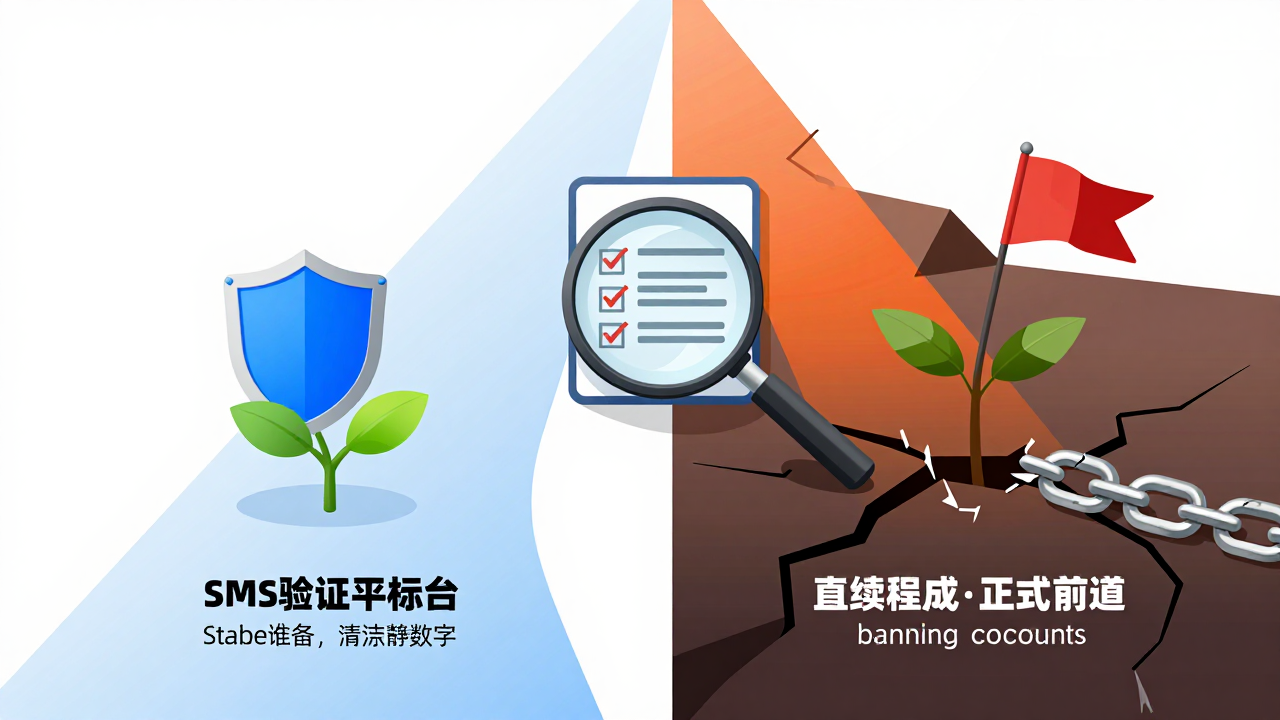
My advice: regardless of how good their marketing sounds, always start with the lowest tier on your first order. Run through the entire flow before committing more money. This single habit will save you from most costly mistakes.
A Real-World Case Study
A friend running a TikTok Shop operation chose a budget SMS verification platform last year and bought 50 numbers to register seller accounts in bulk. Out of 20 registrations, 15 got banned immediately. The remaining five were throttled within days.
When he investigated, he discovered the entire batch came from the same virtual number segment—one that had already been burned through mass registrations and landed on risk-control blacklists. To make things worse, customer support went silent and his deposit vanished.
He switched to a slightly more expensive platform, tested five numbers first, confirmed their survival rate, and then scaled up gradually. The per-code price doubled, but his overall success rate improved so dramatically that his total cost ended up roughly the same.
The lesson here is straightforward: the value of an SMS verification platform isn't "cheap"—it's "stable." A reliable number channel saves you far more in trial-and-error costs and wasted time than you'll ever save on per-code pricing.
Straight Talk About Compliance
Let's be honest: SMS verification services operate in a gray zone. Platforms vary widely in their approach to compliance. Some ignore it entirely; others actively flag risks and restrict certain use cases.
From a responsible standpoint, these services are best suited for routine operations like account registration and verification—not for bypassing platform rules or conducting prohibited activities. Get this wrong, and you're looking at banned accounts at best and legal exposure at worst.
On a positive note, many platforms now require real-name verification or business credentials. It's an extra step, sure, but it signals that the industry is moving toward legitimacy. For long-term users, that's actually protection.
If you're running legitimate operations, choosing a platform with compliance awareness—rather than one that "accepts anything"—is the safer play over the long haul.
Final Word: Test Small, Then Scale
There's no universally "best" SMS verification platform—only what fits your specific use case. But regardless of which provider you're considering, follow one principle: test small before you scale.
Spend a few dollars to test several numbers. Confirm stability, evaluate support response times, and assess number quality before increasing your volume. This approach is conservative, but it will steer you around the vast majority of traps in this industry.
Because the cost of a banned account will always dwarf whatever you saved on verification codes. Hopefully, this guide helps you make a smarter call.
Frequently Asked Questions
What is an SMS verification platform?
An SMS verification platform provides temporary or dedicated phone numbers that receive text message verification codes. These codes are used to register accounts, recover access, or complete two-factor authentication for various online services.
Are SMS verification platforms safe to use?
Safety depends entirely on the provider. Reputable platforms maintain clean number pools, recycle numbers responsibly, and follow compliance guidelines. Budget platforms often reuse numbers excessively, which leads to account bans. Always test with a small purchase before committing.
Why do my accounts get banned after using an SMS verification service?
Account bans typically happen when the phone number you used has been flagged by risk-control systems. This occurs when a number has been reused too many times, linked to suspicious activity, or sourced from a virtual number segment that platforms have blacklisted.
How much does an SMS verification code cost?
Pricing varies widely, from a few cents to several dollars per code. Higher prices usually reflect better number quality, lower reuse rates, and more stable delivery channels. The cheapest option is rarely the most cost-effective when you factor in account loss.
Can I use an SMS verification platform for bulk account registration?
Yes, but proceed carefully. Bulk registration requires a platform with strong API integration, clean number pools, and a responsible recycling policy. Always test with a small batch first to gauge survival rates before scaling up.