Hong Kong SMS Verification Platform: Why Codes Fail and How to Choose Wisely
Hong Kong SMS Verification Platform: Why Codes Fail and How to Choose Wisely
If you run a cross-border operation, you've hit this wall before: you're registering a Hong Kong bank account, setting up an offshore business service, or linking an international app—and the verification code never arrives. Your mainland number won't work, getting a physical Hong Kong SIM is a paperwork nightmare, so searching for a "Hong Kong SMS verification platform" becomes the obvious move. But honestly, the pitfalls hiding behind that search term run deeper than most people expect.
From my experience, starting in late 2025, demand for Hong Kong SMS verification services shifted noticeably from casual users to cross-border businesses and solo entrepreneurs. The reason is straightforward—platform risk controls got smarter, and their ability to flag virtual number ranges improved dramatically. The old trick of grabbing any random verification service and hoping it works? That ship has sailed.
Why Hong Kong SMS Verification Became a Cross-Border Necessity
Here's something industry insiders agree on: Hong Kong acts as the "gateway hub" for cross-border operations. Whether you're registering an overseas company, opening an offshore account, or integrating international payment channels, a Hong Kong number is practically table stakes. The catch? Getting a physical Hong Kong SIM isn't cheap or easy—it requires ID verification and proof of address in Hong Kong, which is a heavy lift for teams based on the mainland.
That's where SMS verification platforms step in. These services essentially rent out a pool of Hong Kong numbers, letting you receive verification codes via a web dashboard or API. Sounds simple enough, but the gap between platforms is massive when you look at number quality, infrastructure reliability, and how they handle your data.
A pattern I keep hearing from cross-border operators: first-time buyers pick a platform purely on price, then learn the hard way. Some services hand out number ranges that risk-control systems have already flagged. You try registering for WhatsApp or Telegram, and either the code never shows up, or your account gets banned within days. This isn't an edge case—it's a widespread "junk number" problem across the industry.
Hong Kong SMS Verification Platform: Three Things That Actually Matter
Before you download and commit to any platform, don't just skim the landing page screenshots. Based on hands-on testing and conversations with peers in the space, filter your options through these three lenses:
- How fresh is the number pool? Reliable platforms continuously retire flagged numbers and rotate in new ranges. If a service claims "all numbers work forever," treat that as a red flag.
- Is the API actually stable? For business users, manually copying codes is a productivity killer. A platform with a solid API is what enables automated registration flows. Many smaller services don't offer API access at all—you're stuck with manual web clicks, which becomes painful once you scale.
- What's the privacy setup? Verification platforms inherently touch sensitive data. Does the service encrypt your information? Can you choose how long a number stays active? Is there an option to destroy the number after one-time use? These details directly impact your account security.
Here's a real-world example worth noting: I tested a platform recently where the number showed as available during signup, but after payment, it simply wouldn't receive messages. Support told me to "wait for carrier sync." Three days later, still nothing. Switched to another provider, and they displayed live number status and success rates before I paid a cent. That difference tells you everything about a platform's technical backbone.
One platform that consistently earns decent口碑 in the industry is Getfollow, which follows this compliant playbook—transparent number status, proper API integration, and routine cleanup of low-quality ranges. That's not to say it's the only option, but it represents the direction the industry is heading.
Reality Check: Verification Services Aren't a Magic Bullet
Plenty of cross-border teams treat SMS verification platforms as a "master key." But in practice, account retention for numbers registered this way typically lands between 50% and 70%, depending on how strict the target platform's risk controls are. For example, financial apps are extremely sensitive to number quality—accounts registered via verification services often trigger secondary verification or get banned outright.
My advice: use verification platforms for auxiliary validation in your real business, not as the primary registration method for core accounts. If your budget allows, pair it with a physical Hong Kong SIM or an eSIM solution for backup.
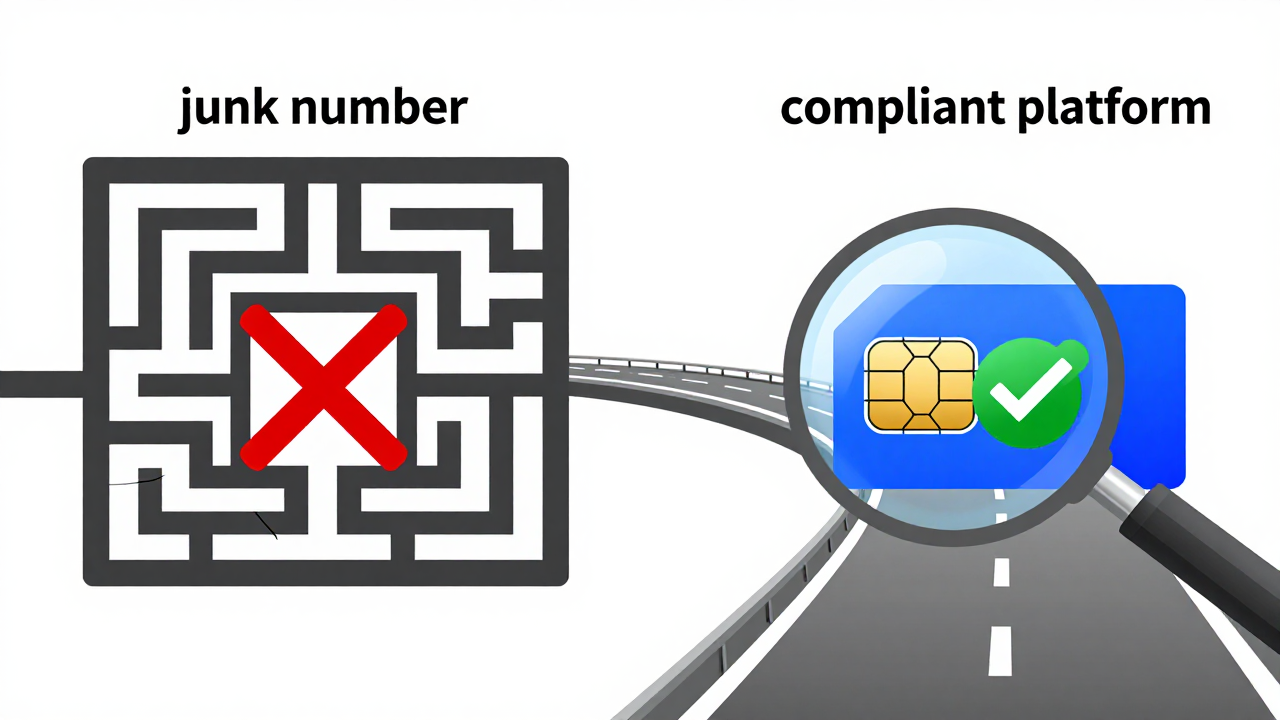
How to Compare Hong Kong SMS Verification Platforms
To make the differences easier to spot, here's a simple comparison framework you can apply to any service you're evaluating:
| Dimension | What Low-Quality Platforms Look Like | What Compliant Platforms Look Like |
|---|---|---|
| Number transparency | No success rate shown before payment | Real-time online status and historical success rates displayed |
| API support | No API, or API locked behind extra fees | Standard API documentation with multi-language support |
| Number validity | Fixed 5-minute window, no extensions | Customizable duration, up to 24 hours retention |
| Support responsiveness | Ticket system that feels abandoned | Technical support available for real-time assistance |
This table isn't meant to point you to one specific provider—it's a thinking tool. Every team's situation differs. If you're doing bulk registrations, API stability is non-negotiable. If you're just handling occasional verification checks, per-use cost might matter more.
Practical Advice: Test Small First, Scale Later
Whichever platform you lean toward, I strongly recommend a "test small, then commit" approach. Start with the minimum top-up, run 3 to 5 common verification scenarios, check whether the numbers trigger any risk flags, and only then decide on bulk purchasing.
From what cross-border operators tell me, this single step eliminates over 80% of the headaches. Platform quality isn't static—some services perform well during your trial, then quietly mix in low-quality numbers later to cut costs. Periodic spot-checks are your best defense.
Coming back to the whole "Hong Kong SMS verification platform" topic, what it really represents is a choice about efficiency tools. Tools themselves aren't good or bad—it's all about how you use them and for what purpose. Hopefully, this breakdown gives you a clearer framework for making that call and helps you sidestep the usual traps.
Frequently Asked Questions
Can I use a Hong Kong SMS verification platform for WhatsApp registration?
Yes, but results vary by platform. Services with clean, freshly rotated number ranges generally work for WhatsApp. However, if the platform uses flagged or recycled numbers, your account may get banned shortly after registration. Always test with a low-cost plan first.
Are Hong Kong SMS verification services legal?
The platforms themselves operate in a gray area. They're not explicitly illegal, but using them to register accounts on services that prohibit virtual numbers may violate those platforms' terms of service. For business-critical accounts, consider physical SIM or eSIM alternatives.
How much does a Hong Kong virtual number cost?
Pricing varies widely. Some platforms charge as little as a few cents per message, while premium services with higher-quality numbers and API access cost more. The cheapest option is rarely the most cost-effective once you factor in failed verifications and time lost.
What's the difference between a Hong Kong SMS platform and a virtual number app?
A verification platform typically provides numbers via a web interface or API for receiving SMS codes, often on a pay-per-use basis. A virtual number app usually offers a full phone experience—calls, texts, and sometimes data—but requires a subscription and may have stricter registration requirements.