How to Build an SMS Verification System in 2026: A Complete Pitfall-Free Guide
How to Build an SMS Verification System in 2026: A Complete Pitfall-Free Guide
After years working in cross-border e-commerce, I've watched too many teams hit a wall at the same step: verification codes that never arrive. In 2026, platform risk-control algorithms are sharper than ever. Grab any random SMS receiving service and you're gambling—worst case, your accounts get flagged and banned outright. So let's dig into how to set up SMS verification the right way, without stepping on the landmines.
Before You Write Code: What SMS Verification Actually Looks Like in 2026
Most solo operators come to me with the same opening line: "I just need a script that can receive a verification code." But once you get your hands dirty, you'll find that SMS verification in 2026 is far more than "receiving a text message."
From my experience, the industry consensus is that SMS verification needs fall into three tiers. Tier one is pure receiving—think registering a Google account or opening a TikTok Shop. Tier two adds forwarding, automatically syncing incoming texts to WeChat Work or Telegram. Tier three includes status callbacks, letting the system plug directly into your registration scripts for fully automated bulk operations.
If you only need it occasionally, tier three is overkill. But if you're running bulk account operations or managing multiple storefronts, tier three is non-negotiable. Most cross-border service providers in 2026 are essentially refining their API offerings around this third tier.
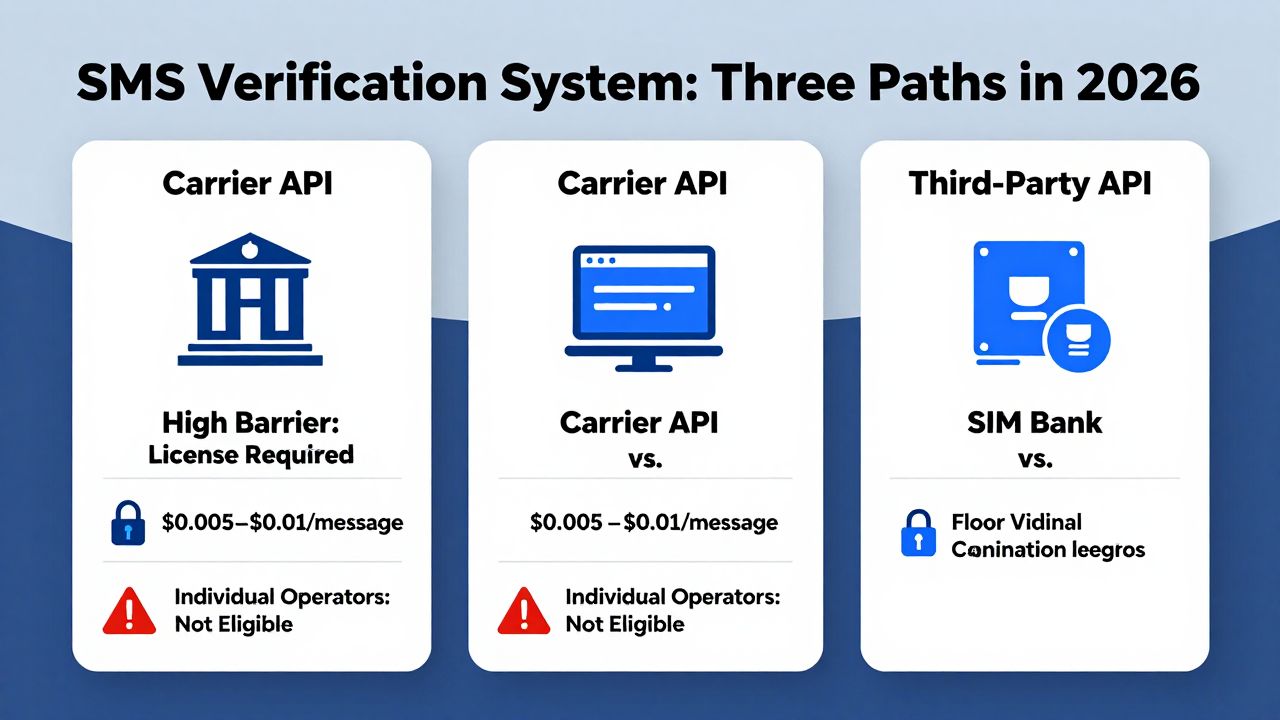
Three Paths to Building an SMS Verification System: Costs and Pitfalls
Let's get the conclusion out of the way: building a system from scratch isn't impossible, but in 2026, the cost of a fully DIY approach has climbed significantly compared to three years ago. The main culprits are carrier API compliance requirements and the cost of sourcing phone numbers.
Path One: Integrate Directly with Carrier APIs (For Qualified Enterprises)
This is the most "legitimate" route, but it also has the highest barrier to entry. You'll need a business license, a value-added telecom service permit, and you'll have to negotiate dedicated channels with carriers. In 2026, carriers are extremely strict about reviewing business SMS traffic—individual operators simply can't get first-hand channel access anymore.
I've tested this myself: even if you secure a channel, the per-message cost lands between $0.005 and $0.01, and that's before monthly fees and development overhead. If you only need a few hundred accounts, the cost per account doesn't pencil out.
Path Two: Buy a SIM Bank + Open-Source Scripts (For Technical Players)
This is the go-to choice for many technically-minded studios. You buy a batch of IoT SIM cards or virtual operator SIMs, plug them into a GSM modem bank, and connect an open-source management system—you can find plenty of these on GitHub—and you're up and running.
But here's the trap that's especially painful in 2026: platforms have gotten scarily good at identifying virtual number ranges. Many cross-border platforms' risk-control systems can instantly flag IoT SIM ranges, triggering mandatory secondary verification or immediate bans. Industry-wide feedback shows that SIM bank success rates in 2026 have dropped at least 30% compared to 2024.
Path Three: Use a Ready-Made SMS Verification Platform API (For Most Teams)
Simply put, this is "renting" rather than "building." You don't manage SIM cards or channels—you just call someone else's API to get a phone number and receive the verification code. In the current market, platforms like Getfollow have built a solid reputation by handling exactly this compliant operation, packaging up both number sources and channels so you can focus purely on your business.
Many cross-border operators report that in 2026, this model costs roughly $0.01 to $0.04 per number. It's slightly pricier than building your own, but the peace of mind and the cleanliness of the number pool are worth every penny.
The Core Workflow of SMS Verification: From Number Allocation to Code Delivery
Whether you build your own or use a third-party service, a complete SMS verification flow always goes through the same stages. Understanding this logic is the key to judging whether a provider actually knows what they're doing.
Step One: Number Allocation. The system assigns you an unused phone number from its pool. Here's a crucial detail: a quality number pool in 2026 must follow the "one card, one number, one use" principle. After your verification code is received, that number gets recycled and goes through a cooling-off period—it can't be immediately assigned to the next person. If a provider can't guarantee this, the code you receive might already be burned, and risk-control will blacklist you instantly.
Step Two: SMS Receiving and Parsing. Once the message arrives, the system needs to automatically extract the verification code. This sounds simple, but in 2026, spam and marketing messages are everywhere. If the parsing algorithm isn't smart enough, it can easily mistake a marketing number for your verification code. This is exactly where many smaller platforms fall apart.
Step Three: Callback Notification. After successfully extracting the code, the system must actively POST it to your designated callback URL or push it to your script via WebSocket. My advice: pay close attention to callback latency. Industry consensus is that under 10 seconds is acceptable, under 5 seconds is excellent. If it takes over 30 seconds, something's wrong with the SIM bank.
Compliance Red Lines in 2026: Don't Risk Your Accounts
Let me be straight with you: in 2026, account security in cross-border e-commerce trumps everything. I've seen too many people chase cheap "black market" interfaces from random developers, only to watch their freshly registered accounts die within three days.
Here's a real case I witnessed: a friend running a dropshipping store grabbed a "black SIM" interface from a forum—$7 for 100 numbers. He registered 50 TikTok accounts. 48 were banned by risk-control the same day. The remaining 2 got throttled the next day. When he added up the wasted time, it cost him far more than the pennies he saved on verification fees.
So here's the real metric for judging any SMS verification solution: not "can it receive codes," but "will my accounts survive after receiving them." In 2026's risk-control logic, a number's "historical cleanliness" carries enormous weight. If a number was previously used to register a flagged account, it's effectively in the blacklist pool—your registration success rate with it will be abysmal.
How to Choose a Reliable SMS Verification Provider: Three Hard Requirements
If you decide to go with a third-party platform, use these three criteria to filter your options. They'll eliminate 80% of the junk providers out there.
- Check the number pool's "freshness": Ask customer support directly for the past week's number pool update log. If they hem and haw, or can only show you screenshots, they're probably feeding you stale data. A trustworthy provider will let you see real-time number pool status.
- Test callback stability: Many platforms in 2026 offer test endpoints. Spend a few dollars on a test number, run 100 callbacks, and tally the success rate. If it's below 95%, move on to the next provider.
- Evaluate after-sales response time: Cross-border operations often run at 2 AM. If your provider only works business hours, you'll have nowhere to turn when things break. Platforms like Getfollow do this well—at least they have 24/7 human support on standby.
Cost Comparison: DIY vs. Third-Party in 2026
To make things crystal clear, here's a side-by-side comparison based on typical 2026 industry pricing.
| Comparison Factor | DIY SIM Bank Setup | Third-Party API Platform |
|---|---|---|
| Initial Investment | Hardware + SIM sourcing, typically $600+ | $0, pay-as-you-go |
| Cost Per Number | $0.005–$0.01 (excluding maintenance) | $0.01–$0.04 |
| Account Survival Rate | Depends on SIM quality, highly variable | Platform-managed risk control, relatively stable |
| Maintenance Burden | Dedicated staff needed to monitor SIM bank | Virtually zero |
| Best For | 1,000+ daily requests with strong technical skills | Small to medium volumes, convenience-first teams |
My recommendation: if your daily need is under 500 numbers, don't overthink it—just use a third-party API. The time you save is better spent on product selection and content, which will pay off far more than the few dollars you'd save. If your volume is genuinely massive, then consider DIY—but budget at least two weeks for debugging.
Final Thoughts: Test Small First, Then Scale
When it comes to building an SMS verification system, the technical side is honestly pretty straightforward. What actually separates the winners from the losers is your understanding of compliance and risk control. In the 2026 cross-border ecosystem, account authority is your lifeline. Don't gamble it away to save a few cents.
Whether you choose DIY or a third-party service, I strongly recommend a "test small, then scale" approach. Spend $7 on 100 test numbers, run your full registration flow, monitor the 24-hour account survival rate and code delivery rate, and only scale up once the data looks good. That way, even if something goes wrong, your losses stay contained.
Cross-border e-commerce is a marathon. SMS verification is just one small step at the starting line. Get this step right, and the road ahead gets a whole lot smoother.
Frequently Asked Questions
What is the cheapest way to receive SMS verification codes?
The cheapest option is building your own SIM bank setup, with costs as low as $0.005 per number. However, this requires significant upfront investment in hardware and technical expertise, and account survival rates have dropped notably in 2026 due to stricter platform risk control. For most users, a third-party API platform offers better value when you factor in reliability and time saved.
Can I use free SMS verification services for bulk account registration?
Technically yes, but we strongly advise against it. Free services typically use shared or recycled numbers that are already flagged by platform risk-control systems. Accounts registered this way face extremely high ban rates—often within 24 hours. The time and effort wasted far outweigh any money saved.
How long does it take to receive a verification code through an API platform?
Industry standard in 2026 is under 10 seconds for a quality provider, with top-tier platforms delivering in under 5 seconds. If you consistently experience delays beyond 30 seconds, it's usually a sign of SIM bank issues or an overloaded number pool. Always test callback latency before committing to a provider.
Is it legal to use SMS verification services for account registration?
Using SMS verification services is legal when you're registering accounts for legitimate business purposes, such as managing multiple storefronts or testing your own platforms. However, you must comply with each platform's terms of service and applicable data protection regulations. Avoid using these services for fraudulent activities, spam, or any purpose that violates platform policies—this can lead to permanent bans and legal consequences.
What should I look for when choosing an SMS verification provider?
Focus on three things: number pool freshness (can you see real-time status?), callback stability (run a test with 100 calls and demand a 95%+ success rate), and after-sales support (24/7 availability is non-negotiable for cross-border operations). Avoid providers that can't demonstrate these fundamentals.