2025 SMS Verification Services: The Invisible Backbone of Cross-Border Business—and Why Picking the Wrong Provider Hurts
2025 SMS Verification Services: The Invisible Backbone of Cross-Border Business—and Why Picking the Wrong Provider Hurts
Let me start with a real story. Last year, a friend running a cross-border e-commerce operation grabbed a random "unlimited SMS verification" website to bulk-register TikTok accounts. The next day, every single account got flagged by the risk control system, and appeals went nowhere. He later discovered the platform was recycling phone numbers that carriers had already blacklisted. This scenario plays out constantly in our circles—in 2025, SMS verification isn't about whether you can receive a code. It's about how long your account survives after you do.
The Real Logic Behind SMS Verification: You're Not Buying a Number, You're Buying Account Survival
Many cross-border operators assume SMS verification is simple—buy a virtual card, receive a code, done. But anyone who's actually done this knows the rabbit hole goes much deeper. Industry consensus says the 2025 SMS verification market has split into three tiers. Tier one is compliant resources directly from carriers. Tier two is resold overseas IoT cards. Tier three is recycled numbers from the gray market—cheap, but dangerously unstable.
After testing multiple platforms myself, I found that any SMS verification service priced more than 30% below market average is almost certainly using recycled numbers. These numbers work fine during registration but trigger platform risk controls within days. At best, you'll face secondary verification demands. At worst, your accounts get permanently banned. For cross-border businesses that need to build and maintain account matrices, that's money straight down the drain.
Three Industry Shifts in 2025 That Should Shape Your Decision
The first shift is clearer quality segmentation by number type. Previously, everyone just compared prices. Now experienced operators ask specific questions: "Are these native number segments?" "Have they gone through real-name verification?" Native segments cost roughly 40% more than virtual ones, but the registration success rate and long-term account support are in completely different leagues.
The second shift is that API stability has become a non-negotiable requirement. Many solo operators start with manual code entry, but once volume ramps up, batch registration and batch verification demands will crush manual workflows. The more mature approach in the industry is choosing platforms that offer API integration—providers like Getfollow package their verification capabilities into standard interfaces that businesses can plug directly into their automation pipelines. That's just one option though. The real point is assessing whether your operation actually needs that level of tooling.
The third shift is rising compliance costs. In 2025, multiple countries have tightened regulations around virtual numbers significantly. Many cross-border operators report that number segments which worked fine before now fail constantly. This isn't platforms slacking off—the regulatory environment has changed. The platforms still delivering stable service tend to have genuine carrier partnerships rather than just stockpiling SIM cards.
The Detail Everyone Overlooks: Post-Registration Retention Matters More Than Success Rate
I've watched too many people obsess over whether a code arrives while completely ignoring what happens to their accounts afterward. Industry data shows that 30-day retention rates vary dramatically across number segments—typically ranging between 50% and 70%. Recycled numbers often retain below 40%, while native segments consistently hold above 60%. How do you test this? Simple. Register ten accounts on the same platform using different numbers, then check how many still log in normally after a week. The test costs almost nothing, yet most people never bother.
Five Practical Dimensions for Choosing an SMS Verification Provider (With a Pitfall Checklist)
Based on conversations with multiple cross-border teams and my own hard-earned lessons, here's a screening framework. It's not exhaustive, but it's practical:
- Verify the source: Ask directly whether numbers come from carrier connections or secondary resale. If the answer is vague, walk away. Legitimate platforms will clearly state their number segment types and compliance boundaries.
- Test the speed: Any verification delay beyond 30 seconds becomes useless during peak hours. Always demand an API test before signing up—never trust "guaranteed instant delivery" promises.
- Check the after-sales: The biggest fears in this industry are providers disappearing after payment or refusing refunds for invalid numbers. Confirm there's a clear compensation policy before committing—for example, whether invalid numbers trigger automatic refunds.
- Ask about retention: Directly ask customer service for retention data across different number segments. If they say "we don't track that," be suspicious. Platforms building for the long term cannot afford to ignore this metric.
- Start with a small test order: No matter how impressive their pitch sounds, keep your first order under $15. This isn't being cheap—it's the most common risk-avoidance strategy in the industry. Many providers allocate completely different resources to new versus established clients. A trial order reveals their real quality level.
Industry Reality Check: The Gray Traps Behind Low-Price Competition
Open any search page and you'll see ads promising "$1.50 for 100 codes" or "unlimited verification." But industry consensus is clear: the cost structure of these services simply cannot sustain long-term operations. A single native number segment costs between $0.04 and $0.11. Add platform operations, customer support, and technical maintenance, and any service priced below $0.14 per code has essentially zero profit margin. So how do they make money? Either through recycled numbers or by reselling your registration data.
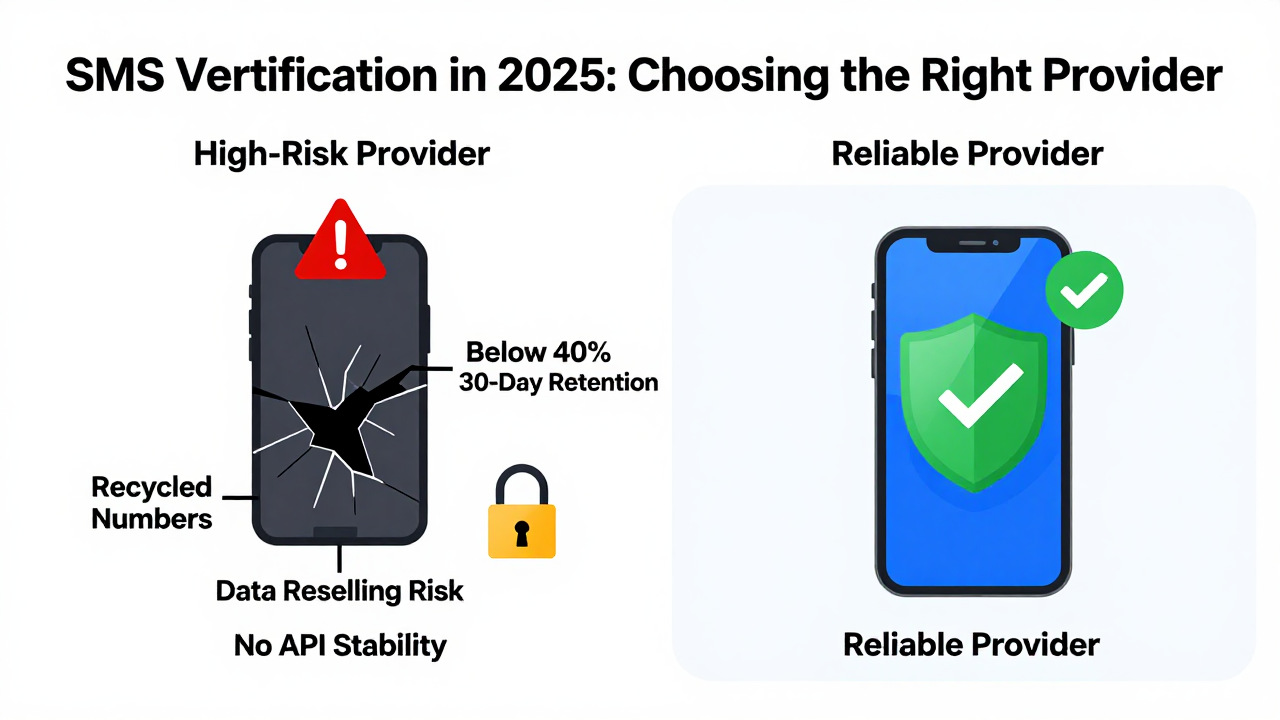
Numerous cross-border operators report that after using cheap verification services, their personal phone numbers started receiving spam marketing messages and even scam calls. That's not a coincidence—it's a classic sign of data being sold downstream. In 2025, enforcement of personal information protection laws has strengthened considerably, but the gray market always finds workarounds. As a user, your only defense is cutting off the risk at the source.
That said, expensive doesn't automatically mean better. There are platforms with fair pricing and solid service—Getfollow, mentioned earlier, is one example. They use transparent per-code pricing without "unlimited" gimmicks. That kind of clarity is actually more reassuring because it signals they've done the math and don't need shady revenue streams. But every platform's situation changes over time. My advice remains consistent: test small first, then decide on a long-term partnership.
Final Thoughts: Verification Isn't the Destination—It's One Link in Your Business Chain
In 2025 cross-border business, SMS verification sits somewhere between trivial and critical. It won't single-handedly determine your success, but choosing the wrong provider can waste your budget at best and collapse your entire account matrix at worst. My take: don't treat verification as a one-time purchase. Treat it as a supply chain function that needs ongoing maintenance—regular testing, comparison, and backup planning. That's the responsible approach.
One practical closing tip: regardless of which platform you're currently using, always maintain a backup channel. The most common industry accident is your primary platform suddenly going down while your registration pipeline stalls at the verification step, watching traffic slip away. Having a backup isn't wasteful—it's insurance.
Frequently Asked Questions
What is the difference between native and virtual number segments for SMS verification?
Native number segments are directly sourced from carriers and typically cost about 40% more than virtual segments. They deliver higher registration success rates and better long-term account retention—generally above 60% after 30 days. Virtual segments are cheaper but more likely to trigger platform risk controls, especially for bulk registration use cases.
How can I test an SMS verification platform before committing?
Start with a small order under $15 and register 10 test accounts on a target platform. After one week, check how many accounts still log in normally. Also demand an API test to measure actual code delivery speed. If a provider hesitates on either test, treat that as a red flag.
Why are cheap SMS verification services risky for cross-border business?
Services priced significantly below market rates typically rely on recycled numbers that carriers have already flagged. These numbers trigger platform risk controls quickly, leading to account bans. Additionally, some low-cost providers offset their losses by reselling user registration data, which can result in spam and even fraud targeting your personal phone number.
What should I look for in an SMS verification service provider?
Key factors include number source transparency (carrier-direct versus resold), API stability, clear refund policies for invalid numbers, and documented retention data across different number segments. Avoid providers that can't or won't disclose their number sourcing and quality metrics.