Online SMS Verification in 2026: Where Does Your Account Security Actually Stand?
Online SMS Verification in 2026: Where Does Your Account Security Actually Stand?
After years in the cross-border e-commerce space, I've watched too many operations crash and burn at the account registration stage. In 2026, platform risk-control algorithms have become brutally sophisticated—a phone number's "background" can basically determine whether your account survives its first week. Let's skip the fluff and talk about online SMS verification: how to choose the right service, use it correctly, and keep your accounts alive without stepping on landmines.
Why Online SMS Verification Became Essential in 2026
Newcomers often ask: why not just buy a few physical international SIM cards? The problem is that cross-border e-commerce and social media management in 2026 routinely requires dozens or even hundreds of accounts per operation. The cost of physical SIMs, the logistics of managing them, and the account-health risks they carry make this approach unsustainable for small teams.
The core value of online SMS verification is that it turns "phone numbers" into an on-demand resource. You don't stockpile SIMs or maintain them. You simply request a temporary or long-term number through a platform, receive a verification code, and move on. Sounds simple, right? But the quality of the number pool, the platform's risk-control strategy, and its overall compliance standards directly determine how long your accounts will actually live.
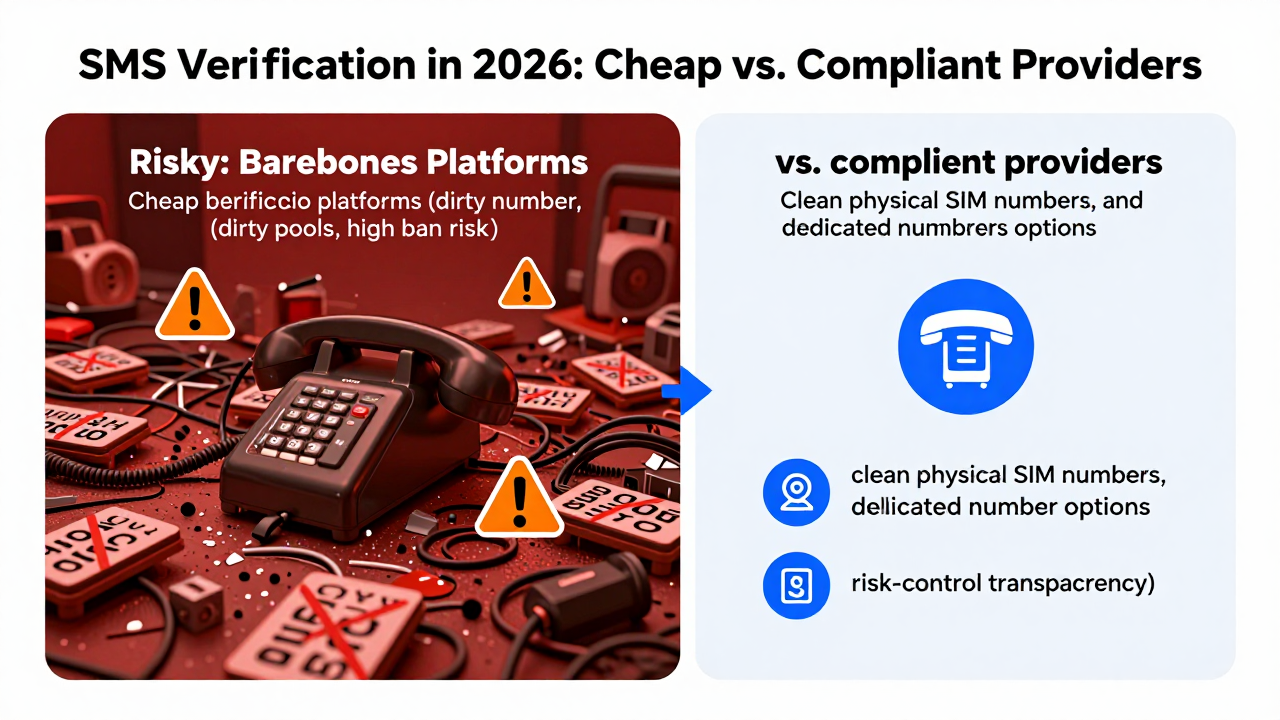
From my experience, the SMS verification market in 2026 has split into two extremes. On one end, you've got dirt-cheap "barebones" platforms selling numbers for pennies—but those number pools are full of flags and bans from every major platform. On the other end, you have services like Getfollow that focus on number recycling discipline and compliant operations, deliberately controlling registration frequency and use cases to keep their numbers "clean."
Three Hidden Traps in SMS Verification for 2026
Let me start with a real case. A friend of mine running a TikTok Shop decided to save money and bulk-registered 50 accounts through a small, cheap SMS verification site. By day three, every single account was hit with a secondary verification request. Why? The previous users of those numbers had all been involved in policy violations, so the entire number block had been blacklisted by the platform's risk-control system. Fifty accounts, wiped out overnight.
This case exposes the single biggest risk in the industry: you never know a number's history. Many platforms resell the same number to multiple users, sometimes even for registering the same platform multiple times. Under 2026's algorithms, this is fatal—risk-control systems now have full correlation analysis capabilities. Bulk operations using the same number blocks, devices, or IP addresses get flagged as "bot behavior" instantly.
The second trap is number longevity. Some business models require long-term account maintenance, like WhatsApp warming or Instagram management. If you're using purely disposable numbers, future SMS verifications and password recoveries become a nightmare. Industry consensus in 2026 is that for matrix operations, at least 30% of your numbers need to be long-hold capable. Otherwise, a single verification code request can cut you off from your entire account asset.
Finally—and this is the one everyone overlooks—there's the platform's own compliance record. Global regulations on data privacy and telecom services are tightening every quarter. Some SMS verification platforms operate in a gray zone, storing or even selling your registration info and SMS content. That's not just an account risk; it's a legal one.
How to Pick a Reliable SMS Verification Provider: My Hands-On Checklist
Cross-border operators often tell me that choosing an SMS verification platform is harder than choosing a server. You can benchmark server performance, but number quality feels like a gamble. Based on years of trial and error, though, I've found a few hard criteria that filter out 90% of the low-quality providers.
- Check the number source: Reputable providers will clearly tell you whether numbers come from "virtual operators" or "physical SIM card pools." In 2026, physical SIM pools offer far better stability and success rates, especially on platforms like WhatsApp and Telegram that are highly sensitive to number segments.
- Test the recycle mechanism: SMS verification isn't a "one-shot" deal. If a code takes over 60 seconds to arrive, or the number gets reclaimed within 10 minutes, that platform is useless for bulk registration. Good providers offer "dedicated number" options—numbers exclusively assigned to you for the duration of validity. This dramatically reduces association risks.
- Look for risk-control transparency: Reliable platforms proactively tell you which number segments work for which platforms and which ones have already been flagged. Getfollow, for example, labels each number with its recommended use case during assignment. That level of detail is a huge green flag in 2026 because it lets you avoid risk before it hits you.
One warning: don't shop by price alone. In 2026, a quality physical SIM number costs roughly $0.50 or more. If a platform quotes significantly less, you're either getting virtual numbers or recycled ones. Saving $0.50 per number to lose your entire account matrix is the worst trade you can make.
Balancing Compliance and Efficiency: What's New in 2026
Here's an interesting trend I've noticed: in 2026, more and more serious operations are integrating SMS verification into their "account asset management systems" rather than treating it as a disposable tool. That means they care about traceability and lifecycle management for their numbers.
Some platforms now offer "number custody" services—after you register an account with a rented number, that number stays available for all future verifications on that account until you release it. This model is ideal for cross-border businesses that need long-term account maintenance. Platforms like Getfollow have built their reputation on exactly this compliant approach: they sync registration records and usage status with you, so you always know the "birth environment" of your accounts.
That said, the SMS verification industry in 2026 is still full of variables. Platform algorithms change, risk-control rules shift, and even telecom policies in certain countries evolve. The smartest approach isn't chasing a "universal solution"—it's building your own testing and feedback loop.
My Recommendation: Test Small First, Scale Later
No matter what "success stories" you hear about any platform, stay skeptical. In 2026's cross-border ecosystem, there's no permanent fix. The safest strategy is: buy 5–10 numbers first, run small test accounts to measure registration success rates, follow-up verification triggers, and number retention. If nothing abnormal happens within a week, then consider bulk purchasing.
Online SMS verification is fundamentally a race against time and a game of cat-and-mouse with platform risk-control systems. The only thing you can rely on isn't any platform's promise—it's your own attention to detail. Hopefully this guide helps you avoid some of the pitfalls I've already stumbled into. If you have more questions about building account matrices, drop them in the comments—I'll do my best to respond based on real 2026 experience.
Frequently Asked Questions About Online SMS Verification
Is online SMS verification legal for business use?
Yes, using SMS verification services is legal in most jurisdictions, but the compliance level of the provider matters. Always choose platforms that operate transparently and follow local telecom and data privacy regulations. The legal risk comes from providers that store or resell your data—not from the act of receiving a verification code.
What's the difference between virtual numbers and physical SIM numbers for SMS verification?
Virtual numbers are generated through VoIP or virtual operator systems and are cheaper, but they're more likely to be flagged by platforms like WhatsApp or Instagram. Physical SIM numbers come from actual carrier SIM cards and have much higher success rates for account registration and long-term verification. For serious operations, physical SIM numbers are the safer investment.
How many SMS verification numbers do I need for account matrix operations?
It depends on your platform and scale, but a common starting point is 10–20 numbers for testing. For established matrix operations, industry practitioners typically reserve at least 30% of their numbers for long-term use—these handle ongoing verifications and password recoveries. The rest can be disposable for one-time registrations.
Can I reuse the same number for multiple accounts on the same platform?
Technically, some platforms allow it, but in 2026 this is extremely risky. Risk-control systems now detect same-number registrations instantly and will flag all associated accounts. Always use a fresh number for each account, and prefer providers that offer dedicated numbers to avoid cross-account associations.