How to Choose a 24-Hour SMS Verification Platform: A Cross-Border Insider's Guide to Avoiding Pitfalls
How to Choose a 24-Hour SMS Verification Platform: A Cross-Border Insider's Guide to Avoiding Pitfalls
Over the years running cross-border operations, I've personally managed accounts on more than ten different SMS verification platforms. Honestly? This industry has some deep waters. Most newcomers start by asking "which one's cheapest," then end up registering a bunch of overseas accounts that get flagged and banned by risk controls within days. Money wasted, time lost. So let's skip the fluff and talk about what actually goes on behind the scenes with 24-hour SMS verification platforms—the stuff nobody really wants to say out loud.
The Bottom Line First: Don't Treat SMS Verification as a "Master Key"—It's a Double-Edged Sword
If you're in a hurry to register for TikTok, WhatsApp, or some overseas e-commerce store, here's my advice: figure out how strict the platform's risk controls are before you decide which type of verification service to use. A lot of cross-border operators have reported that since 2025, major social platforms have noticeably stepped up their ability to detect virtual number ranges. The failure rate for SMS verification is more than double what it was two years ago.
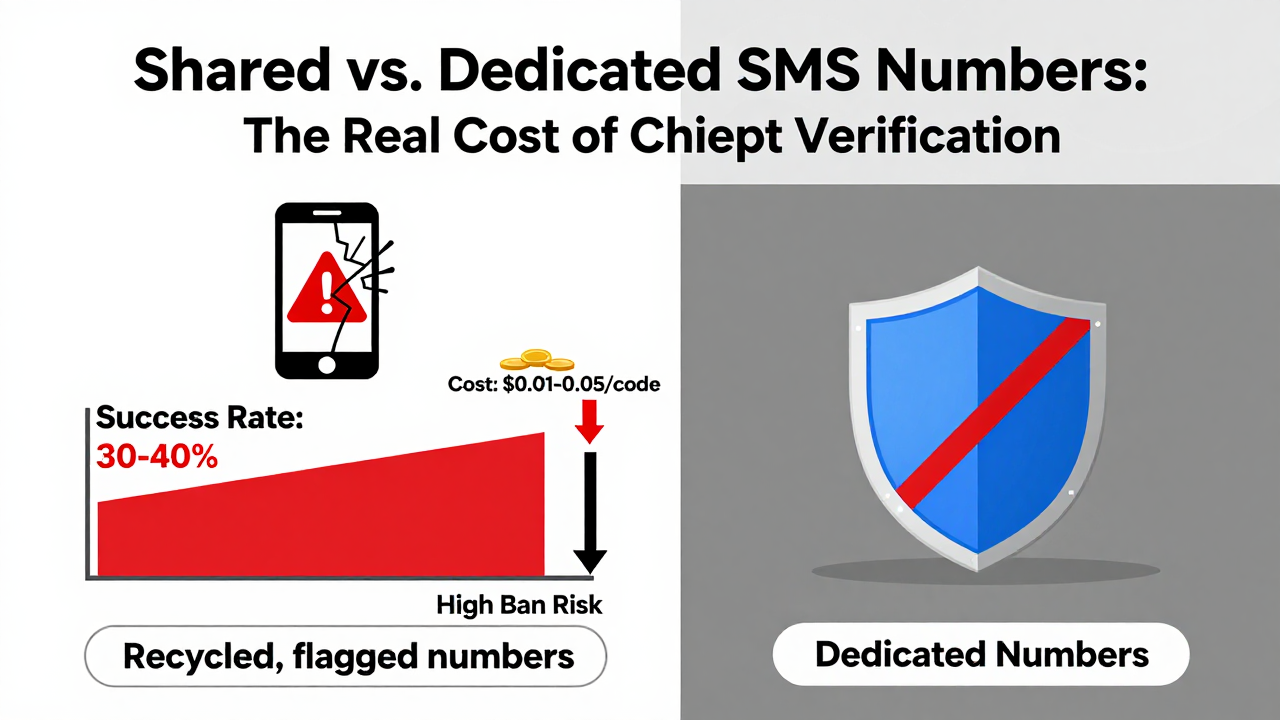
From my own testing, using a typical shared SMS verification platform to register WhatsApp, only about three or four out of ten codes actually bind successfully and survive past 48 hours. That retention rate directly determines whether your account enters the normal recommended traffic pool. If you're running a social media matrix, that attrition rate will hurt.
What the Industry Really Looks Like: What Are 24-Hour SMS Platforms Actually Selling?
Here's the thing—SMS verification platforms aren't selling "phone numbers." They're selling the capability to receive verification codes. Behind that capability lies a combination of number range resources, channel stability, and disaster recovery mechanisms. Most platforms on the market operate on the "cloud number" model: carriers or virtual operators release batches of numbers, platforms integrate them in bulk, then distribute them to users.
There's a general consensus in the industry: the "freshness" and "purity" of a number are the core drivers of pricing. Newly released number ranges have the highest registration success rates and command the highest prices—typically between $0.07 and $0.20 per code. Meanwhile, "aged" numbers that have been reused countless times and registered across dozens of services might cost as little as a fraction of a cent—but the success rate is painfully low. Many budget platforms attract inexperienced users by selling exactly these low-quality numbers.
One pattern I've noticed: platforms like Getfollow have built a relatively solid reputation by following a more compliant operating model. They don't do unlimited sharing. Instead, they isolate number ranges and keep registration frequency per number within a safe threshold, which is why their retention rates stay above the industry average. It's a good example of how SMS verification services are shifting from "wild growth" to more refined operations.
Real-World Cautionary Tale: How a Studio I Know Got Wiped Out
Last year, a friend running an e-commerce business decided to save money and loaded $70 onto some small platform. Guess what happened? The 20 Amazon buyer accounts he registered with those numbers got banned all at once within three days. The reason was simple—the IP addresses behind those numbers and the registration behavior patterns were too similar, so the risk control system flagged everything as "bot activity."
That story teaches us two things. First, the IP cleanliness and device fingerprint behind the numbers a platform provides matter just as much as the number itself—but most platforms won't tell you any of that. Second, every penny you save on verification fees can turn into ten times that in account recovery costs later. So my recommendation is simple: if you're building something long-term, pay a bit more for a service with dedicated number ranges. Don't chase those few cents in savings.
Four Hard Criteria for Picking a Reliable Provider
Based on my own mistakes and conversations with friends who work in risk control, here are four criteria you can use right now to evaluate any platform:
- Channel Stability: Don't just look at the "24/7 online" marketing claims. Check whether they have a real-time channel monitoring page, or whether their customer support actually responds at 2 AM. Many platforms work fine during the day but have severe delays after midnight—which is a dealbreaker if you're operating in US or European time zones.
- Number Range Refresh Frequency: Ask how often they add new numbers. If a platform hasn't updated its number ranges in six months, those numbers have already been flagged and burned by every major platform. You'll register one account and watch it die immediately.
- Failure Refund Policy: Reliable platforms will confidently promise a full refund if you don't receive a code. Those that hem and haw, offering store credit instead of actual money back, are probably using your payment to plug their own cash flow holes.
- Privacy Protection: Your business data flows through their servers. If they don't even have a proper privacy policy, block them immediately. These days, data leaks are scarier than account bans.
Also, I strongly recommend running a small-scale test before committing. Spend around $7 to test registration across five different platforms—check success rates, latency, and post-registration stability. It's a cheap test that will filter out 90% of the junk platforms. And remember: any provider pushing you to recharge a large package upfront deserves extra scrutiny.
A Word of Caution: SMS Verification Isn't a "Zero-Cost" Game
Many small studios treat SMS verification platforms as a way to "game the system." That's a fundamental misunderstanding. Accounts registered through SMS verification inherently carry a "virtual" label and are classified as low-weight accounts in platform risk assessments. Even if you succeed in registering, the effort required to nurture those accounts is significantly higher than with accounts tied to physical SIM cards.
Specifically, accounts registered via virtual numbers are more likely to trigger secondary verification when posting content, adding friends, or even just logging in. Many cross-border operators report that TikTok accounts registered through SMS verification face nearly a 100% chance of being asked for phone verification within the first three days if activity is too frequent. And that means you'll need to use the SMS verification service again—creating a cycle of recurring fees.
So here's my stance on SMS verification platforms: they're a tool for cold-starting, not a foundation for long-term operations. Once your business reaches a stable order volume, start migrating your core accounts to physical SIM cards or eSIM solutions. That's the sustainable path.
Final Thoughts: A Conservative Strategy Beats Aggressive Spending
The 24-hour SMS verification platform industry will only become more regulated over time. Platforms that survive on rock-bottom prices and low-quality number ranges will gradually get pushed out. For cross-border businesses and independent studios, the goal right now isn't to "find the cheapest platform"—it's to "find the platform least likely to cause problems."
My advice is straightforward: test small first, then commit long-term. Whether it's a more compliant provider like Getfollow or another platform you're evaluating, run it on a non-core project for two weeks and look at the actual data. Don't go all in from day one. These days, playing it safe beats playing it fast.
Frequently Asked Questions
What is the success rate for SMS verification platforms in 2025?
Success rates vary significantly by platform and target service. Based on industry feedback and my own testing, shared number platforms typically see a 30-40% success rate for major platforms like WhatsApp or TikTok when measured by accounts that survive past 48 hours. Premium platforms with dedicated number ranges can achieve significantly higher retention, often above 70%.
Are cheap SMS verification platforms worth it?
Usually not for serious operations. Low-cost platforms typically recycle heavily used numbers that have already been flagged by risk control systems. While the per-code price may be tempting, the resulting account bans and wasted effort almost always cost more than paying for a quality service upfront.
How can I test an SMS verification platform before committing?
Start with a small deposit—around $10 to $20—and test registration across 3 to 5 different target platforms. Track success rates, message delivery time, and whether accounts remain active after 48 hours. This small investment will quickly reveal whether a platform is worth scaling with.
What's the difference between shared and dedicated number ranges?
Shared numbers are used by multiple customers simultaneously, which increases the chance of triggering risk controls. Dedicated numbers are isolated for individual use, keeping registration frequency low and maintaining the number's "clean" status. Dedicated numbers cost more but offer dramatically better success and retention rates.
Is it legal to use SMS verification platforms?
The legality depends on your jurisdiction and the terms of service of the platforms you're registering for. SMS verification services themselves operate in a gray area in many regions. Always review the terms of service for both the verification platform and the target service, and consult with legal counsel if you're operating at scale.