5 Yuan SMS Verification Codes: The 2026 Low-Cost Playbook for Cross-Border Business
5 Yuan SMS Verification Codes: The 2026 Low-Cost Playbook for Cross-Border Business
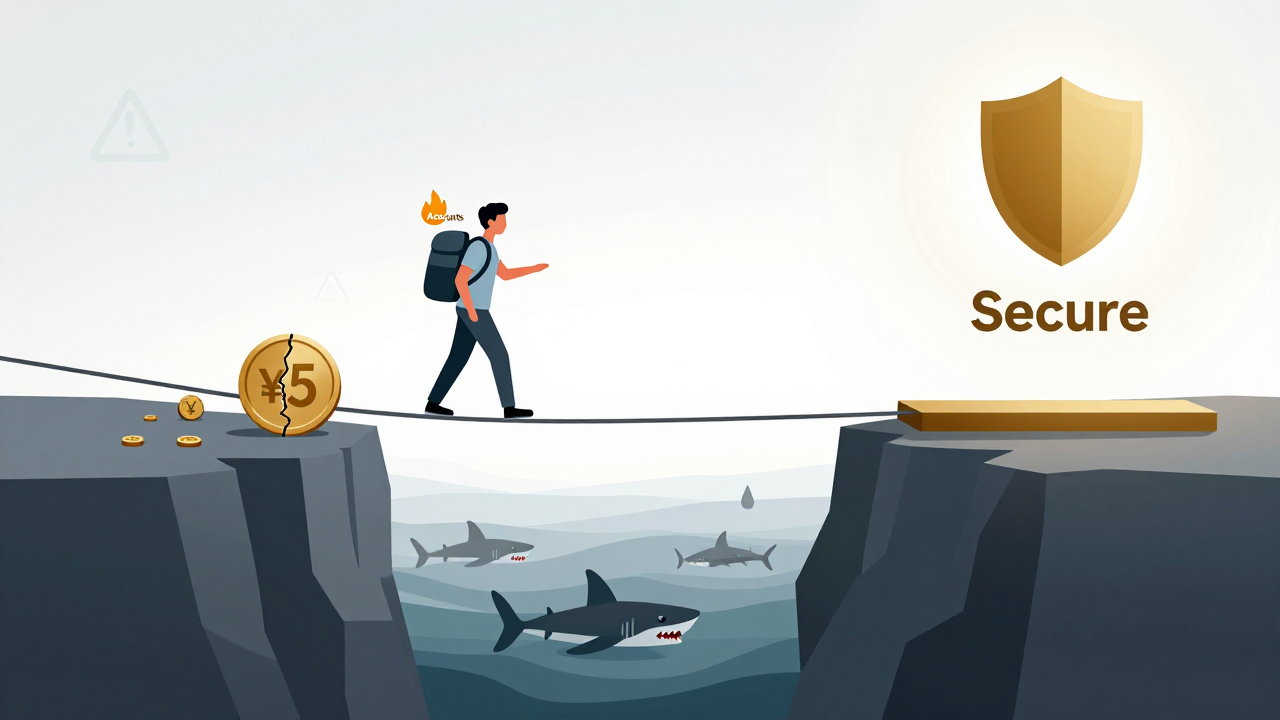
Let's talk about something practical. If you're running a cross-border operation in 2026—whether that's registering social media accounts, verifying WhatsApp, or spinning up TikTok test profiles—5 yuan SMS verification codes have basically become the industry's worst-kept secret for low-cost entry. But cheap is cheap, and most people haven't thought through what's actually hiding underneath.
I've spent years in the cross-border services space and watched too many studios lose entire batches of accounts because they botched the verification step. All that upfront work, gone. So let's skip the fluff and talk about what the 5 yuan verification ecosystem actually looks like in 2026.
Why Cheap SMS Verification Became Essential by 2026
The core reason comes down to one word: speed. Cross-border work is all about batch testing and rapid iteration. You can't register a hundred accounts with real SIM cards just to see which ad creative performs—the cost and time would kill you.
Industry consensus is clear: major overseas platforms leaned harder into phone verification in 2026, not less. Whether it's Instagram's bot detection or Telegram's group management protocols, a phone number remains the most basic trust anchor. That's created massive demand for verification services.
There's also a psychological angle. Five yuan sits neatly in the "spare change" zone of your mental budget. For solo operators, dropping a few bucks on a test run feels like nothing. For larger companies, it's negligible marginal cost. But here's the catch: low marginal cost doesn't mean low total cost—the real expense is the manpower lost when accounts get banned and you have to start over.
The Three Layers of Deception in Budget SMS Verification
Plenty of providers slap a "5 yuan SMS verification" label on their service, but once you actually use it, you'll notice three distinct gaps between what's advertised and what you get.
Layer one: The "freshness" filter on the number pool. In 2026, verification platforms source numbers from two main channels: IoT SIM card pools and batch-issued virtual operator numbers. The former is cheaper but carries higher risk flags; the latter is more stable but harder to price low. At the 5 yuan price point, you're almost certainly getting shared numbers from an IoT pool—meaning that number has likely been used to register seven or eight other platforms already, possibly even flagged as risky.
Layer two: The "survivorship bias" filter on success rates. When a provider claims "95% success rate," they're usually talking about SMS delivery success—not the actual verification success rate when you try to register on your target platform. Based on feedback from cross-border operators, the realistic pass rate through platform risk controls lands somewhere between 60% and 75%. The rest is sunk cost.
Layer three: The "time lag" filter on customer support. There's an unwritten rule in the verification industry: if you don't receive the code, most platforms auto-resend once, but the window is only a few minutes. With a 5 yuan plan, you're in the queue during peak hours—by the time your number comes up, the resend window has already closed. Contact support and you'll likely get a canned "please try again later."
A Real-World Example of Getting Burned
Early last year, a friend running a dropshipping funnel vented to me about loading 200 yuan into a verification service. When he tried registering TikTok accounts, three consecutive numbers came back flagged as "previously banned." Turns out, that number pool contained segments that had been heavily hit in a recent mass-ban wave. Classic number pool contamination—the provider hadn't cleaned out flagged segments.
So don't just look at the unit price. Five yuan per attempt sounds cheap, but if you need three attempts to get one success, your real cost is 15 yuan plus wasted time. That's exactly why many studios have shifted toward pay-per-success models or providers that offer quality guarantees.
Where 5 Yuan SMS Verification Makes Sense (and Where It Doesn't)
Not every use case justifies budget verification numbers. From my observations, these are the reasonable applications in 2026:
- Short-term test accounts: If you need to verify a platform's registration flow or test a landing page for ad creatives, a disposable number works perfectly fine.
- Initial stage of batch account warming: Before accounts accumulate any weight, use verification numbers for the initial signup, then swap in real SIM cards later (tedious, but people do it).
- One-time verification codes: Registering for a forum, grabbing app membership perks—scenarios where number continuity doesn't matter.
But in these situations, steer clear of the 5 yuan tier entirely:
- Main account registration: If you're building a brand account for long-term operation, never use a verification number. If risk control flags it, the appeal process is brutal and often unsuccessful.
- Payment channel binding: For PayPal, Stripe, or any financial account verification, you must use a real SIM or dedicated virtual number. The risk of frozen funds is simply too high.
- Core social media business accounts: Facebook pages you plan to run ads on—accounts registered with verification numbers have lower trust scores, and ad accounts are far more likely to trigger reviews.
The Compliance Divide in 2026's Verification Industry
This brings up a major shift happening in the industry. In 2026, as countries tighten SIM card real-name registration and anti-fraud requirements, verification providers are going through a serious shakeout.
The old "money in, code out" platforms have either vanished or pivoted. The survivors fall into two camps: pure tool providers that only supply numbers and SMS forwarding without touching account operations, and service-oriented providers that layer on registration guidance and risk-control advice.
One platform that's earned a solid reputation in the industry is Getfollow, which follows this compliant operating model—treating verification as a foundational capability rather than the sole selling point. They emphasize number reuse rates and pool cleanliness. Their unit price might run slightly above 5 yuan, but the overall success rate is noticeably more stable. I'm not here to shill for them—just noting that in 2026, providers willing to invest in number pool maintenance deserve a second look.
How to Vet a Verification Platform Before You Commit
Here are some practical screening criteria, straight from people who've learned the hard way:
First, check the number pool refresh frequency. Reliable platforms periodically purge flagged number segments. Ask customer service for their latest segment list and cross-reference it against recently exposed risk segments.
Second, test the refund policy. If a platform explicitly states "refund on verification failure" or "equal-value compensation," it signals confidence in their number quality. Anything with a strict "all sales final" policy—walk away.
Third, observe peak-hour performance. Run a test between 2 PM and 6 PM your time (which is morning overseas). That's when verification demand peaks. A platform that holds up during peak hours will generally perform fine the rest of the day.
The Real Cost Calculation: Beyond the Unit Price
Too many cross-border operators only look at the sticker price—that's the most common blind spot in 2026. Let's break down the full cost picture:
| Cost Factor | 5 Yuan Tier | Mid-to-High Tier (8-15 Yuan) |
|---|---|---|
| Per-attempt verification success rate | 60%-75% | 85%-95% |
| Hidden time cost (retry attempts) | High; averages 2-3 tries | Low; usually passes first try |
| Post-registration account survival rate | Lower; prone to secondary risk flags | Relatively stable |
| Support response speed | Severe queueing; slow | Dedicated support channel |
These figures aren't precise statistics, but they reflect widespread industry feedback in 2026. The takeaway: when you calculate cost per successfully registered account, the 5 yuan tier often isn't meaningfully cheaper than the 10 yuan tier—you're just spending more time.
My advice: treat the 5 yuan tier as a scout, not your main force. Use budget numbers to probe a platform's risk-control tolerance. Once you confirm a provider's number quality is consistent, then consider long-term partnership or upgrading your plan.
Risk Warnings and Responsible Usage Guidelines
Finally, I need to pour some cold water on this. Platform risk control in 2026 isn't just about phone numbers anymore. Device fingerprints, IP cleanliness, behavioral patterns—all of it factors into the evaluation. When you register with a verification number, you're starting with a "low trust" label.
Specific risks include:
- Collateral bans: Multiple accounts registered with verification numbers from the same IP can trigger mass account linking and bans.
- SMS delays or non-delivery: During peak times, verification codes arriving more than 5 minutes late is standard—some platforms don't even send them.
- Number recycling risks: The number you used might get assigned to another user who registers on a different platform. If that platform has cross-referencing risk controls, your account takes the hit.
Here's what you can actually do about these risks:
First, always use a clean IP environment. Don't register on public Wi-Fi or shared proxies. Even if it costs a few extra yuan for a dedicated IP, it's cheaper than losing accounts.
Second, complete your account profile immediately after registration. Fill in the avatar, bio, and display name. Accounts that look "human" significantly reduce the odds of secondary risk-control triggers.
Third, scale up only after small-scale testing. With any new verification provider, load 20 yuan, register 5-10 accounts, and monitor survival rates over a week. If fewer than 50% survive, switch providers without hesitation.
Coming back to where we started—5 yuan SMS verification codes remain a cost-effective tool for cross-border business in 2026, but they're a tool, not a magic bullet. Understand their boundaries, control your use cases, and you can find that delicate balance between low-cost experimentation and account security. Hopefully, this guide helps you dodge a few landmines.
Frequently Asked Questions
Can I use 5 yuan SMS verification codes for my main business accounts?
Absolutely not. If you're registering a brand account you plan to operate long-term, always use a real SIM card or dedicated virtual number. Verification numbers carry a low-trust label from day one, and if risk control flags your account, the appeal process is notoriously difficult—and often unsuccessful.
Why do cheap verification codes fail so often on platforms like TikTok or Instagram?
Budget verification numbers typically come from shared IoT SIM pools that have already been used across multiple platforms. These numbers are frequently flagged by platform risk-control systems, which is why your verification attempt fails even though the SMS was technically delivered. It's not the code that's the problem—it's the number's reputation.
How can I tell if a verification platform is legitimate?
Look for three things: a transparent refund policy for failed verifications, a number pool that's regularly cleaned of flagged segments, and consistent performance during peak hours. If a provider won't answer questions about their number sourcing or refuses refunds on failures, treat that as a red flag and move on.