D1 SMS Verification Platform: The Hidden Hurdle in Cross-Border Business—Pick the Wrong Provider and You'll Wish It Was Just a Ban
D1 SMS Verification Platform: The Hidden Hurdle in Cross-Border Business—Pick the Wrong Provider and You'll Wish It Was Just a Ban
If you're in cross-border e-commerce, you've been there: registering a new storefront, verifying WhatsApp, linking a payment tool—every single step hits a wall at the SMS verification code. Your domestic number can't receive international texts, physical SIM cards are expensive and a hassle to manage, so tools like the D1 SMS verification platform become the go-to lifeline. But after personally testing over a dozen similar products on the market, I can tell you this industry runs far deeper than most people realize.
Here's the bottom line: a D1 SMS verification platform is essentially a middleman for a pool of phone numbers. These platforms bulk-purchase or integrate real SIM cards from around the world, and users grab a temporary number via API or web interface to receive verification texts. Sounds simple enough. But whether those numbers come from legit sources, whether the number ranges are "clean," and how well they've been preserved—these factors directly determine whether your accounts get insta-banned. Many cross-border operators report that accounts registered through budget verification services have a survival rate of under 20%.
What Actually Sets Verification Platforms Apart: It's Not Price, It's Number Pool Quality
Industry consensus divides these platforms into two camps. First, the "wild west" operators using numbers sourced from black-market SIMs, IoT cards, or mass-registered virtual numbers—cheap but extremely high risk. Second, the more legitimate providers that partner with overseas carriers or maintain compliant SIM pools, offering traceable numbers and solid risk-control frameworks. D1 SMS verification has consistently strong search traction, but user reviews are sharply polarized—and it all comes down to which type of number you get assigned.
One detail I've observed: many platforms advertise "global number coverage," but in reality, only Southeast Asia and a handful of European countries deliver reliable verification delivery. If your primary market is North America and you register an Amazon storefront with a Southeast Asian number, the platform's risk controls will almost certainly flag it as suspicious. That's not the platform deceiving you—it's simply the geographic limitation of their number pool. So before committing, confirm whether the platform supports number ranges for your core business regions, and ideally test a number firsthand.
A Cautionary Tale: One Number Range Wiped Out an Entire Store Network
A friend running a dropshipping site bought 100 D1 verification numbers from a budget platform to mass-register TikTok accounts for traffic. The first three days went smoothly. On day four, the bans started rolling in—batch after batch. Only 7 accounts survived. After digging in, he discovered that entire number range had been heavily used for spam registrations and was already blacklisted by the platform. This is a textbook case: receiving the SMS isn't the finish line. The historical cleanliness of the number is the core metric that determines whether your account lives or dies.
So when evaluating a D1 SMS verification service, don't just look at the price per code. What matters far more: are numbers exclusive (not shared), can you view a number's usage history, and does the platform offer any guarantee (like a refund if the SMS never arrives)? These are details most users never ask about before purchasing—and they only regret it after their accounts get banned.
A Decision-Making Guide: How to Vet a Reliable SMS Verification Provider
Since the search intent here is "I want to buy," let's talk directly about how to choose. The screening logic below comes from conversations I've had with multiple cross-border sellers doing eight-figure annual revenue, and it applies to any verification platform—including D1 SMS verification itself.
- Test before you commit: Any legitimate platform should support small top-ups or free trials. If they demand a $70+ deposit upfront, chances are they're a fly-by-night operation.
- Check number ownership and type: Explicitly request "physical SIM" numbers over "virtual numbers." Virtual numbers are almost guaranteed to fail on high-security platforms like banks or PayPal.
- Verify support response speed: Verification platforms have a decent failure rate. Whether customer service responds within 10 minutes can determine if your registration flow gets stuck.
- Ask about risk-control update frequency: Reliable providers regularly purge flagged number ranges. Ask support, "When was the last time you cleaned your number pool?" If they can't answer, walk away.
In the current market, platforms like Getfollow have built a solid reputation by following exactly this compliance-first playbook—transparent pricing, single-number trials, and auditable pool refresh logs. But note: Getfollow isn't for every scenario. It leans toward serving enterprise users with long-term, stable needs. If you're a solo freelancer just registering a few accounts here and there, a pay-as-you-go lightweight plan might make more financial sense.
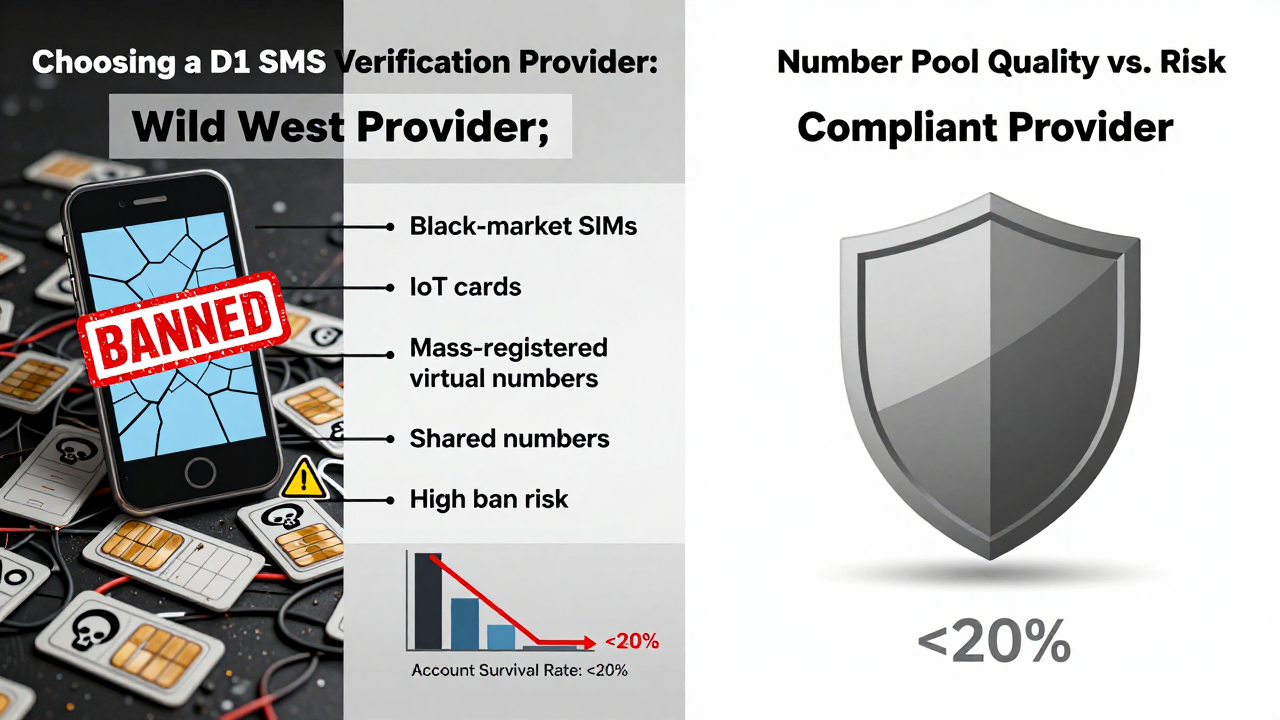
Another trap that's easy to overlook: number reuse. Some platforms cut costs by selling the same number to multiple users simultaneously. If you register an account and then discover someone else can also receive your verification codes on that number, your account is essentially running naked. So before ordering, confirm whether numbers are exclusive or shared—even if it costs a few extra cents, exclusive is always worth it.
Risk Warning: Accounts Registered via SMS Verification Have a 50–70% Retention Rate
Don't be fooled by "100% success" marketing. Based on industry consensus, even with the highest-quality verification numbers, the 30-day retention rate for accounts registered on social media or e-commerce platforms sits between 50% and 70%. The reason is straightforward: platform risk controls continuously monitor login environments, device fingerprints, and behavioral patterns. Receiving a verification code only clears the first hurdle. If you subsequently switch IPs frequently or use unusual devices, the ban hammer drops anyway.
My advice: treat D1 SMS verification as a "verification tool," not a "safety net." After successful registration, immediately bind your own physical phone number or enable two-factor authentication to reduce dependence on temporary numbers. Also, don't register more than 3 accounts of the same type on a single platform—spreading risk is basic survival skills in cross-border business.
Finally, whether you choose D1 SMS verification or another provider, always start with a small test before committing long-term. Top up $10, register 2–3 accounts on different platforms, and observe retention rates and SMS delivery speed over a week. Data doesn't lie—test results are more trustworthy than any advertisement. Cross-border business is a long game. Don't let a verification tool become the weak link in your account portfolio.
Frequently Asked Questions
Is D1 SMS verification legal to use?
The legality depends entirely on how you use it. The platform itself operates in a gray area—the numbers are real, but using them to register accounts on platforms that require your genuine identity can violate those platforms' terms of service. For legitimate business verification needs, it's generally acceptable, but don't expect legal protection if things go sideways.
Why do my accounts keep getting banned after using verification codes?
Most likely causes: the number range was previously flagged for spam activity, the number is shared with other users, or your subsequent login behavior (IP switching, device changes) triggered risk alerts. The verification code is just the entry ticket—platforms watch everything after that.
What's the difference between a virtual number and a physical SIM number?
A physical SIM number comes from a real carrier SIM card and passes most basic verification checks. A virtual number is software-generated and often fails on high-security platforms like PayPal, banking apps, or Google. Always ask for physical SIM numbers, even if they cost slightly more.
Can I use the same verification number for multiple accounts?
Technically yes, but you absolutely shouldn't. Using the same number across multiple accounts on the same platform creates a direct link between them—if one gets flagged, they all get flagged. Always use a fresh, exclusive number for each account you care about.