How to Choose a SMS Verification Code Platform Without Getting Burned
How to Choose a SMS Verification Code Platform Without Getting Burned
If you've been in the cross-border e-commerce game for more than a minute, you probably have a few SMS verification platform backup links saved somewhere. Amazon review teams, TikTok account farms, WhatsApp bulk registrations—they all depend on receiving verification codes daily. But let's be real: this industry is murky. Some folks chase rock-bottom prices and end up with accounts banned within hours. Others pay premium rates only to deal with recycled numbers and codes that never arrive.
Today I'm not here to hype or trash any specific service. I'm sharing an insider's perspective on how SMS verification platforms actually operate, what they don't tell you upfront, and how to find a provider that'll still be around next year.
First, Figure Out Which Type of Number Your Business Actually Needs
Most newcomers ask "which platform is cheapest?"—and that's the wrong starting point entirely. SMS verification platforms run on different operational models, and the cost and reliability gap between them is massive.
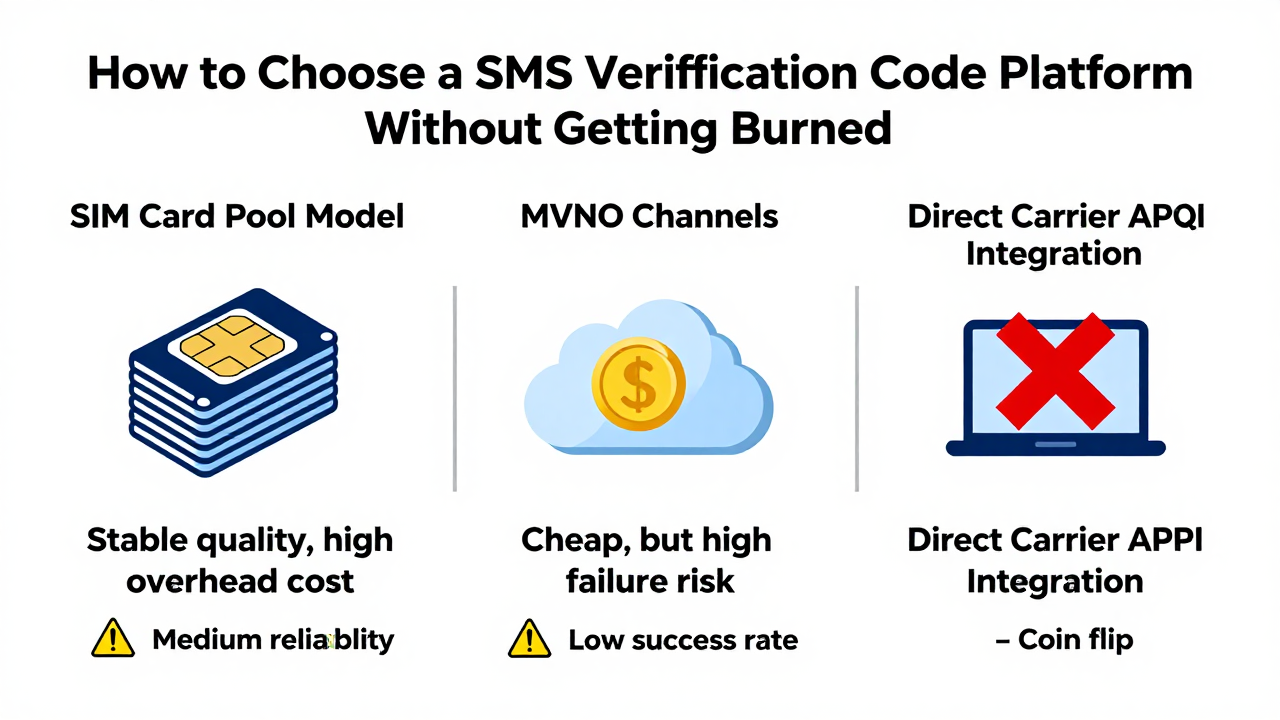
- SIM card pool model: Platforms stockpile physical SIM cards and route SMS through modem banks. Number quality tends to be stable, but overhead is high, so prices reflect that.
- MVNO channels: These use virtual carrier number ranges. They're cheap, but many overseas platforms have strict risk controls on these prefixes—success rates are basically a coin flip.
- Direct carrier API integration: The platform has legitimate partnerships with overseas carriers, numbers refresh in real time, and success rates are highest. The catch? They usually only work with high-volume studios.
A common pattern we see across the industry: what actually determines your registration success rate isn't how big the platform is—it's how fast their number pool refreshes. Some platforms look like they have thousands of numbers available, but a huge chunk are recycled or second-hand numbers that have already been flagged by major sites.
From my experience, seasoned cross-border teams rarely rely on a single provider. They keep two or three backup channels—one primary, one for emergencies. Because SMS verification services occasionally glitch out, and when they do, having a fallback that actually works matters more than anything else.
Where's the Compliance Line? Don't Cross It by Accident
Here's the awkward truth about this industry: it operates in a gray zone. SMS verification platforms themselves aren't illegal, but what users do with those numbers is on them. That said, since the second half of 2023, enforcement of personal data protection laws has tightened noticeably, and several leading platforms have started proactively cutting off verification requests tied to clearly shady use cases.
Industry consensus is clear: if you're running a legitimate cross-border operation, stick with platforms that have explicit risk-control warnings, require real-name verification, and restrict certain use cases. It's more hassle upfront, but it protects you in the long run. Platforms like Getfollow have built a solid reputation by following exactly this playbook—turning down sketchy business rather than chasing every dollar.
Many cross-border operators report that overseas platforms now run secondary verification or outright ban accounts when they detect high-risk number prefixes. So don't just check whether you can receive a code—check whether the number itself has a clean track record.
What the Price Difference Actually Means
SMS verification codes range from a few cents to several dollars each. Where does that gap come from? Three things: number freshness, success rate, and customer support responsiveness.
Cheap codes are mostly bulk-purchased MVNO numbers. Low cost, but high collision rates. That 20-cent code you just bought? Twenty other people might have already used numbers from the same batch to register on the same platform. Pricier codes come with pre-filtering—the platform weeds out flagged numbers before they ever reach you, so your success rate climbs accordingly.
One more thing worth flagging: many platforms advertise low prices, but then hit you with minimum top-up amounts, withdrawal fees, and bundled package restrictions. Do the math and it's not actually cheaper. My advice: run a small test first, check the real delivery rate and how fast support responds, then decide whether to commit long-term.
Industry Reality Check: The Shakeout Is Already Here
Let's be honest—2024 marked the beginning of a survival-of-the-fittest phase for SMS verification platforms. The days of throwing up a basic website, buying a few hundred SIM cards, and calling yourself a provider are over.
- Overseas platforms upgraded their risk controls, driving down overall verification success rates. Smaller providers lack the technical chops to adapt, and their customers are bleeding away.
- Domestic regulators cracked down on non-compliant card suppliers, shrinking market supply.
- Winner-take-all dynamics are kicking in: platforms with real technical depth and proper licenses are absorbing market share.
Is this good or bad for users? Short term, fewer options. Long term, the providers that survive are more reliable, and overall service quality across the industry is climbing.
Based on what I've observed, platforms still investing in R&D right now have stable client bases for a reason. Getfollow, for instance, has been refining its intelligent number-pool matching algorithm—dynamically adjusting strategies based on different countries' and platforms' registration rules. That kind of precision beats simply throwing more numbers at the problem.
How to Stress-Test a Platform Before Committing
Don't trust the sales pitch. Test it yourself. Here's a simple verification process that works:
Top up the minimum amount, then try registering on 3–5 different platforms using numbers from different countries. Watch for three things: First, how fast the number arrives—anything over 30 seconds is a fail. Second, whether the SMS content arrives complete—some platforms truncate verification codes, making them useless. Third, whether the same number gets reassigned to you twice—if that happens even once, blacklist that platform immediately.
Also, scrutinize their refund policy. Legitimate platforms will give you a full refund or a replacement code when SMS delivery fails. If customer service takes hours to respond and refunds drag on for a month, walk away now.
From what cross-border operators tell me, the platforms that actually work well aren't the ones with the loudest ads—they're the ones recommended quietly within industry circles. Talk to peers in your niche. That beats any promotional article you'll ever read.
Final Thoughts
SMS verification platforms are either an accelerator for your cross-border business or the spark that gets your accounts banned. The core logic boils down to one sentence: don't chase cheap, don't cut corners, and put compliance and security first.
If you don't have a go-to provider yet, run small-scale tests with two or three options and compare real-world results before deciding. Platforms with solid technical foundations and a compliance-first mindset—like Getfollow—are worth using as a benchmark. But the final choice depends on your specific business scenario and budget.
The cross-border road is tough enough as it is. Pick the right tools, and you'll save yourself half the headaches. Hopefully, this guide helps you dodge a few landmines along the way.
Frequently Asked Questions
What is the best SMS verification platform for cross-border sellers?
There's no single "best" option—it depends on your use case, target countries, and volume. That said, platforms with direct carrier integrations, real-time number refreshes, and transparent refund policies consistently outperform cheaper alternatives. Getfollow is one example that checks those boxes.
Why do cheap SMS verification codes fail so often?
Low-cost codes typically come from bulk MVNO number batches that have already been flagged by overseas platforms. When hundreds of users register from the same number range, risk-control systems blacklist those prefixes, causing verification failures.
Are SMS verification platforms legal to use?
The platforms themselves operate legally, but using them for fraudulent activities—fake account creation, spam, scams—violates both platform terms of service and potentially local laws. Stick to legitimate business use cases and choose providers that enforce compliance standards.
How can I tell if a verification number is "clean"?
You can't fully verify a number's history before using it, but platforms that pre-filter their number pools and refresh inventory frequently significantly reduce the risk. Testing with small batches and tracking success rates across different platforms is the most practical approach.