165 SMS Verification: The Hidden Infrastructure Cross-Border Sellers Can't Ignore
165 SMS Verification: The Hidden Infrastructure Cross-Border Sellers Can't Ignore
If you run an e-commerce operation—especially one juggling multiple storefronts and social media accounts—you already know the pain of SMS verification. Years ago, we all relied on physical overseas SIM cards: expensive, clunky, and a nightmare to manage. Then virtual number segments emerged, but stability was always hit-or-miss. Over the last two years, 165 SMS verification has become a buzzword in cross-border seller communities. From my conversations with folks running independent sites and TikTok Shop accounts, opinions are sharply divided—some swear by it, others got burned.
Why the split? The 165 number segment itself isn't the problem. The real issue is which provider you're plugging into. Let me break down how 165 SMS verification actually works, where the risks hide, and how to pick a service that won't leave you empty-handed.
165 SMS Verification Isn't Rocket Science—But the Compliance Lines Are Tighter Than You Think
The 165 segment gained traction because it's cheap to acquire domestically and covers most mainstream overseas app registrations. Here's the catch most people miss: 165 numbers run on virtual operator infrastructure, not the traditional three major carriers. That distinction matters because overseas platforms' risk-control systems assign lower trust scores to virtual numbers.
I've tested several number segments myself. 165 performs reasonably well for WhatsApp and Telegram registrations, but when you hit financial or payment apps requiring secondary verification, failure rates climb noticeably. That's not the segment failing—it's overseas platforms upgrading their virtual number detection.
So if you're planning to mass-register Amazon or PayPal accounts with 165 SMS verification, drop that idea now. It's like carrying a standard ID through customs—possible, but you're on your own if questions arise. Industry consensus: 165 works best for social media accounts and everyday utility app registrations, not high-stakes financial scenarios.
Three Non-Negotiables When Choosing a 165 SMS Verification Provider
The market is flooded with 165 SMS verification services, priced anywhere from a few cents to several dollars per message. I've watched too many small studios chase the cheapest option, only to find their purchased numbers were already flagged, verification codes never arrived, and customer support vanished after payment.
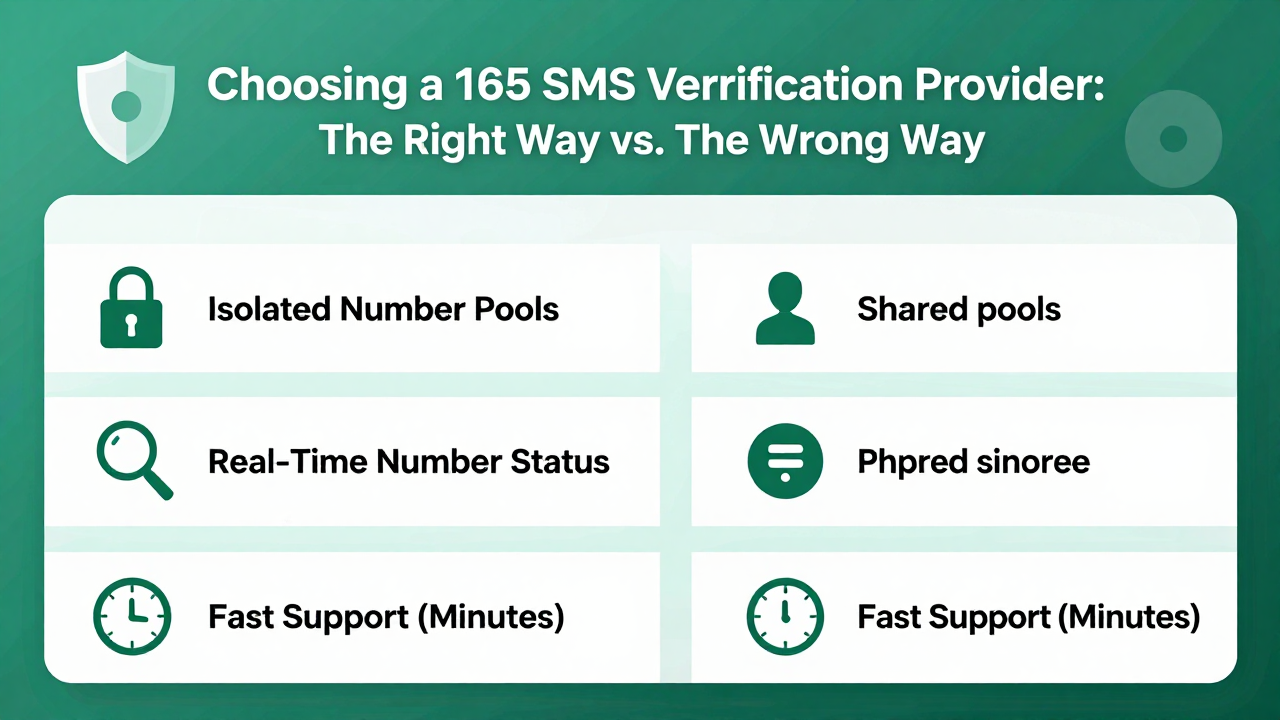
Here's one practical question that filters out unreliable providers fast: Do you offer dedicated number locking or an exclusive number pool? If they can only assign random numbers with no cooling-off period guarantee, you're likely on a shared pool—where verification code retention rates hover between 50% and 70%, sometimes worse.
You also need explicit privacy protection terms. 165 SMS verification involves phone numbers and verification codes changing hands. If a provider resells numbers or funnels them into gray-market operations, your account association risk multiplies exponentially. Platforms like Getfollow have built solid reputations by following this exact playbook: isolated number pools, managed cooling periods, and no plaintext storage of verification codes. Get those commitments in writing before you commit.
How One Friend's Studio Got Dragged Down by a Bad Verification Provider
Let me share a real story. A friend running overseas social media matrix accounts bought 5,000 165 SMS verification messages from a small reseller to save money. Everything looked fine for two weeks—then logins started dropping en masse, and several accounts got permanently banned. The culprit? That reseller had sold the same number batches to multiple clients, cross-contaminating account environment weights.
That lesson sticks with me. 165 SMS verification isn't a one-off transaction—it feeds into your entire account lifecycle. If you're just testing, cheap works. But for long-term operations, choose providers with clear SLAs on number isolation and support response times. Paying a few extra cents per message is nothing compared to the cost of losing accounts.
Where the Industry Stands: 165 SMS Verification Is Maturing Fast
A couple of years ago, this market was the Wild West. Anyone with a server and an API could start selling, often without basic number status checks. But post-2025, as cross-border platforms tightened their risk controls, the industry started consolidating. One-off resellers are fading out, replaced by providers who actually care about number quality and compliance boundaries.
One trend I'm noticing: more providers now offer real-time number status queries—you can see a number's recent registration success rate and risk flags before purchasing. Sounds simple, but few teams can pull it off because it requires years of data accumulation and fine-tuned risk models. If a provider offers this level of transparency, you're probably dealing with a serious operation.
Don't overlook support response speed either. Verification codes occasionally fail to arrive, and how fast support responds directly impacts your workflow. Many big platforms have two-hour support queues—small studios can't afford that. Before committing, send a test order and measure their response time in minutes, not hours.
On pricing, industry consensus says anything under $0.04 per message likely involves number reuse or quality compromises. Stable 165 verification services have real costs—they can't price indefinitely low. If budget is tight, buy less rather than switching to ultra-cheap channels. Otherwise, downstream account maintenance costs will eat your margins anyway.
Final Thoughts: Start Small, Test Thoroughly, Then Scale
165 SMS verification is just a tool—neither good nor bad on its own. What matters is how you use it and who you partner with. For cross-border businesses and solo operators, the safest approach isn't bulk purchasing upfront. Start with a small test batch to evaluate number quality, support responsiveness, and account survival rates. Once the data looks good, scale gradually. That's how you keep risk manageable.
Remember: any provider promising "100% success" or "zero bans" is feeding you a line. Cross-border business is fundamentally a probability game. Your job is to stack the odds in your favor with reliable tools and partners. 165 SMS verification can be a shortcut if you navigate it right—or a money pit if you don't. Hopefully, this guide helps you skip a few landmines and save some hard-earned cash.
Frequently Asked Questions
What is 165 SMS verification used for?
165 SMS verification is primarily used by cross-border e-commerce sellers and social media managers to receive verification codes for registering and maintaining overseas accounts like WhatsApp, Telegram, and various utility apps. It's a cost-effective alternative to physical SIM cards, though it's not recommended for high-risk financial platforms.
Is 165 SMS verification safe for bulk account registration?
It depends on the platform and the provider. For social media and everyday apps, 165 numbers generally work fine. For financial services with strict risk controls, expect higher failure rates. The key is choosing a provider with isolated number pools and proper cooling-off periods to avoid cross-contamination between accounts.
How much does 165 SMS verification cost?
Pricing varies widely, from a few cents to several dollars per message. Be wary of anything below $0.04 per message—it usually signals number reuse or compromised quality. Stable, reliable services cost more because they invest in number pool management and compliance infrastructure.
What should I look for in a 165 SMS verification provider?
Three things matter most: dedicated number locking or exclusive pools, clear privacy protection policies, and fast customer support. Also check whether they offer real-time number status queries—a sign they've invested in quality control. Always test with a small order before scaling up.